A bathroom renovation almost always ends up costing more than it seemed at the start. It's not that contractors are greedy — it's that the budget is usually calculated based on the visible part: tile, tub, sink. Meanwhile, half the budget goes toward things no one will see after the renovation is done: pipes, screed, waterproofing, ventilation, wiring. Below we break down the budget line by line so you can work out your own number in advance and not stall halfway through the job.
All prices in this article are approximate, for 2026, for a typical bathroom of about 4 m² in an apartment building. In big cities they're higher; in the regions, noticeably lower. Use them as a framework, and get exact figures from two or three contractors for the same scope of work.
What the budget is made of
It's convenient to split the budget into three baskets: rough-in work, finishing, and fixtures. The rough-in part is the least predictable: until the old tile comes off, no one can say for sure what condition the walls and risers are in. Finishing depends mainly on the materials chosen and how complex the layout is. Fixtures are the easiest to control — you see the price of a faucet or a toilet in advance.
- Rough-in work: demolition, debris removal, pipe routing, wiring, leveling walls and the floor, waterproofing.
- Finishing: tile or other coverings, grout, ceiling, doors, the box around the in-wall unit.
- Fixtures: a tub or shower area, toilet, sink with a cabinet, faucets, a heated towel rail, an exhaust fan, light fixtures.
- Incidental costs: delivery, hauling materials up, consumables, post-renovation cleaning.
Line-item table: approximate prices
The table below gives ranges for a bathroom of about 4 m² with roughly 20 m² of wall area to be tiled. The lower end corresponds to a tidy budget version; the upper end is a mid-range job with good materials and an experienced crew.
| Article | Labor, ₽ | Materials, ₽ |
|---|---|---|
| Demolition and debris removal | 15,000–30,000 | 3,000–6,000 |
| Replacing water-supply and drain pipes | 25,000–60,000 | 10,000–30,000 |
| Wiring, ventilation | 10,000–25,000 | 5,000–15,000 |
| Leveling walls and floor screed | 25,000–50,000 | 10,000–20,000 |
| Waterproofing the floor and wet areas | 8,000–18,000 | 5,000–12,000 |
| Laying tile (floor and walls) | 60,000–120,000 | 40,000–120,000 |
| Ceiling | 6,000–15,000 | 4,000–15,000 |
| Installing fixtures | 15,000–35,000 | 80,000–250,000 |
| Approximate total | 164,000–353,000 | 157,000–468,000 |
That adds up to a total of 320,000 to 820,000 rubles, and that's a normal spread. The twofold difference doesn't come from one expensive faucet, but from a combination of choices: tile format, heated flooring, an in-wall unit instead of a floor-standing toilet, a floor drain instead of a shower tray, a concealed faucet.
Cheap tile will outlast your disappointment, while cheap waterproofing will turn into a renovation for the neighbors downstairs — and a second renovation for you.
What moves the budget the most
Tile format and layout
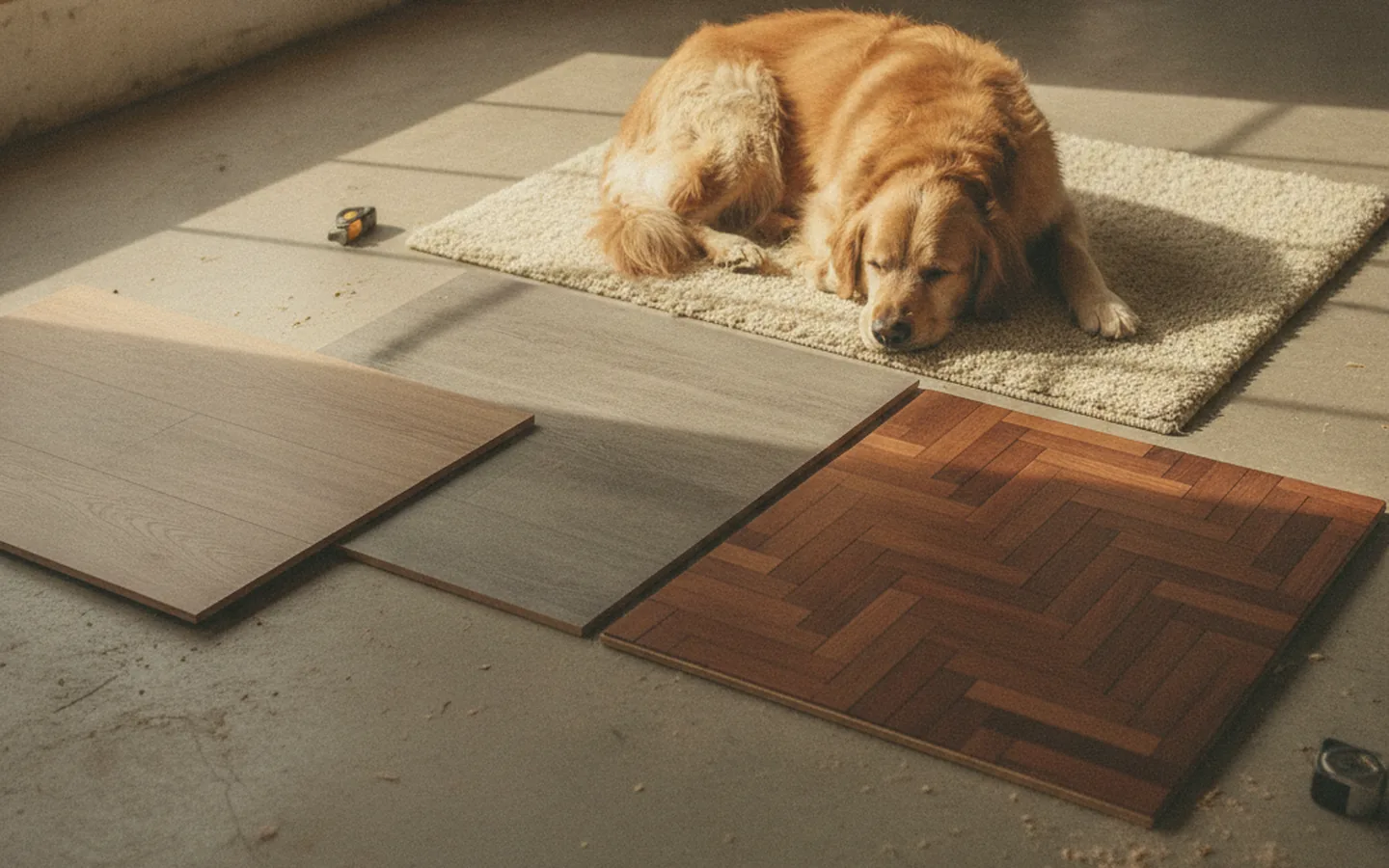
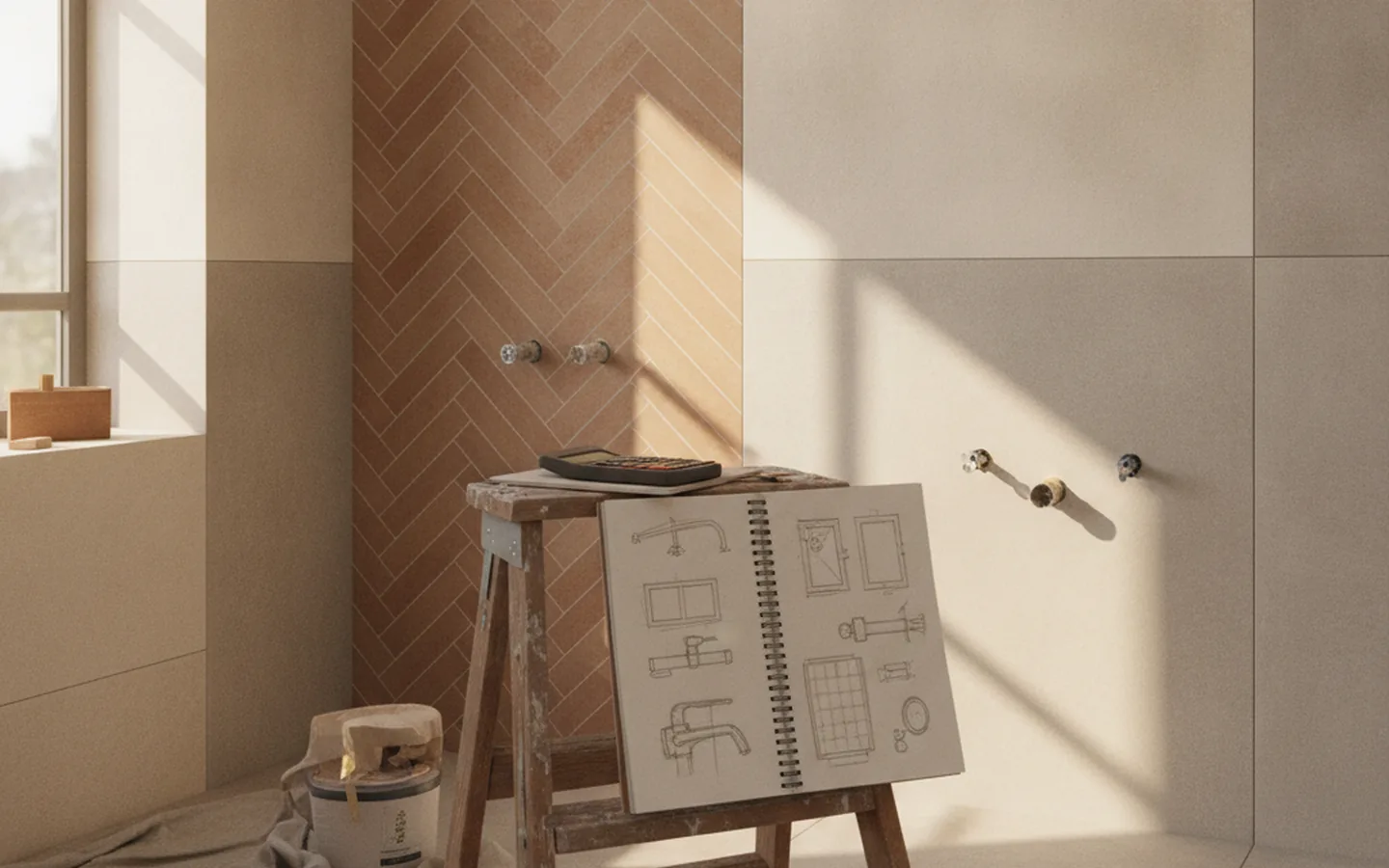
A large format of 60×120 cm or bigger looks expensive, and it is more expensive to lay: the installer needs a perfectly flat wall, and cutting produces more waste. A herringbone layout, small mosaic, or 45-degree corner cuts can push labor cost up by one and a half to two times compared to a simple straight layout.
A shower area without a tray
A floor drain requires raising the floor level, building a slope, and very careful waterproofing. It's one of the most attractive solutions, and also one of the most demanding in terms of skill. If the crew is doing it for the first time, a good-quality tray is the safer choice.
Concealed systems
One line item people often forget until the last moment is the heated towel rail. A water-based one connects to the heating or hot-water riser, and relocating it requires sign-off from the management company and shutting down the riser. An electric one is easier to install, but needs its own power point, which has to be planned for at the rough-in wiring stage.
Another factor that strongly affects the final number is timing. A rush job is almost always more expensive: the crew charges extra to work without breaks, and materials get bought wherever they happen to be in stock right now rather than wherever is cheapest. If you can order the tile and fixtures ahead of time and calmly wait for delivery, the budget usually comes out noticeably lower.
An in-wall toilet unit, a built-in faucet, and concealed access panels free up space, but they add their own labor, materials, and modules to the budget. It's important that every unit under the tile stays accessible for servicing.
Where not to cut corners
There are items where saving money looks reasonable on the day of purchase but turns into expenses several times larger a couple of years later. That's everything hidden inside the walls and under the floor, and everything connected to water.
- Pipes and fittings. Replacing the plumbing during the renovation costs several times less than tearing out finished tile later for a single leak. If the pipes are more than 15-20 years old, replace them right away.
- Waterproofing. The whole floor, extending up the walls, and the entire wet zone of the shower. This is a cheap line item, and the consequences of skipping it affect both your apartment and your neighbors'.
- Ventilation. A quiet exhaust fan with a backdraft damper saves you from mold on the grout lines and smells from other apartments.
- Wiring. A dedicated circuit with a residual-current device, moisture-protected outlets, and light fixtures with the right protection rating.
- Crew qualification. The price gap between a random handyman and an experienced crew is usually smaller than the cost of one redo.
Where you can save
Another way to save without losing quality: keep the fixtures where they already are. When the toilet, sink, and tub stay in their original spots, you don't need to run new drain lines, build slopes, or raise the floor. In a small bathroom, rearranging rarely gains you as much space as it costs.
There are also items where sensible compromises barely affect durability. Wall tile can be a basic-collection choice, with an accent tile used only on one wall or in a niche. Sink furniture can be bought ready-made instead of custom. An expensive designer faucet can easily be swapped for a reliable mid-range model from a trusted brand with available spare parts.
- Buy materials with a margin, but from a single batch: different batches of the same tile can vary in shade.
- Compare fixture prices ahead of time, and plan the purchase for once the pipes are already routed.
- A regular suspended or stretch ceiling handles moisture just fine, as long as the ventilation works.
- Heated flooring can be installed just in the area where you step out of the tub or shower, rather than across the whole floor.
Reserve and payment schedule
Build a 10-15% contingency reserve into the budget. In older housing stock it's almost always needed: crooked walls, a rotten section of riser, weak screed. If the reserve isn't needed, it's easy to spend on accessories and good lighting.
It's best to split payment to the crew into stages: demolition and rough-in work, waterproofing and surface prep, tiling, fixture installation. Sign off on each stage in person. It's especially important to see the waterproofing before it gets covered with tile: ask for photos and a leak test, with the floor flooded with water for 24 hours.
How to build your own budget in one evening
It helps to split the budget into a mandatory part and a nice-to-have part right away. The mandatory part covers pipes, waterproofing, ventilation, wiring, and basic finishing. The nice-to-have part covers heated flooring, a concealed faucet, niche lighting, designer tile. If the budget starts to grow, you trim the second part, not the first, and you don't risk reliability.
It's also worth calculating the everyday inconvenience separately. Renovating the only bathroom in an apartment means two to four weeks without a normal shower. Some people arrange to stay with relatives; others rent a place by the day for that period. Those costs are part of the budget too, even though they never show up in the contractor's estimate.
Start with measurements: floor area, wall area to be tiled, the position of the risers and windows. Then decide what stays in place and what gets moved: relocating the toilet or shower increases the amount of pipe work. Put together a list of fixtures with specific models and prices. After that, send the same brief to several contractors and compare not the final totals, but the line items: a cheap quote often simply leaves out waterproofing or debris removal.
This approach takes a couple of evenings, but it gives you the main thing: you understand what you're paying for, and you can make calm decisions when, halfway through the renovation, the wall behind the old tile turns out nothing like you'd hoped.
FAQ
How much does renovating a 4 m² bathroom cost in 2026?
As a rough guide for 2026, from 320,000–350,000 rubles for a budget version up to 800,000 rubles and above for a mid-range job, including labor and materials. The final figure depends on the condition of the walls and pipes, the tile format, and the fixtures you choose.
Do the pipes need replacing if they aren't leaking?
If the pipes are more than 15-20 years old or made of old steel, it's worth replacing them during the renovation. Tearing out finished tile later for a single leak costs noticeably more.
What contingency reserve should you budget for unforeseen expenses?
Usually 10-15% of the budget. In older housing stock it's better to plan for the upper end, because hidden defects in walls and risers only turn up after demolition.
This article is for informational purposes only and does not replace professional advice. Prices are approximate and current as of the review date. Found an error? Let the editors know via the contact page.