A bright smile stopped being a celebrity-only privilege long ago: whitening toothpastes sit on every supermarket shelf, and dental clinics promise results “in a single visit.” Yet prices vary by tens of times, and the single word “whitening” covers very different technologies. We've gathered the main methods and compared their cost, how noticeable the effect is, and how long it lasts, to make it easier to pick an option that fits your budget and expectations.
One disclaimer up front: all prices below are approximate, as of 2026, and depend heavily on the city, the clinic's tier, and the condition of your teeth. Only a dentist can give you a final treatment plan and price after an examination. This article doesn't replace a doctor's consultation and isn't a prescription.
Why teeth darken and what whitening actually does
A tooth's color comes from two layers. On top is the semi-transparent enamel; underneath is dentin, which has a naturally yellowish tint. Over the years, enamel thins and the dentin shows through more. At the same time, pigments from coffee, tea, red wine, and tobacco build up on the surface. These are extrinsic stains, and a regular professional cleaning removes a significant part of them. There's also intrinsic darkening: age-related, after an injury, after root canal treatment, or due to certain medications taken in childhood.
True whitening works through hydrogen peroxide or carbamide peroxide. Active oxygen penetrates the enamel and dentin and breaks down the staining molecules. The higher the gel concentration and the longer the contact time, the stronger the effect — and the higher the risk of temporary sensitivity. That's where the price difference comes from: a strong formula used under a dentist's supervision costs more than a weak gel meant for self-application.
Store-bought products: cheap but slow
The most affordable group is sold over the counter at pharmacies and stores. The concentration of the active ingredient is limited, so the results are modest.
- Whitening toothpaste: roughly 250 to 1,200 ₽ per tube. These mostly work as an abrasive that polishes off plaque rather than lightening the tooth itself. A difference shows up after several weeks of regular brushing.
- Mouthwashes: 300 to 900 ₽. They work gently and tend to maintain an achieved shade rather than change it.
- Whitening strips: 1,500 to 5,000 ₽ for a one- to two-week course. They give the most noticeable result in this group.
- Gels with a one-size-fits-all tray and an LED lamp: 2,000 to 6,000 ₽. The tray from the kit doesn't fit tightly, so the gel leaks onto the gums, which often causes irritation.
The upsides are clear: low price and the ability to start today. The downsides too: the result is limited to one or two shades, it doesn't last long, and misuse (longer than the instructions say, or with untreated cavities) can easily cause increased sensitivity. Charcoal powders and baking soda are in a category of their own: they scratch the enamel, and the surface then stains faster. Even before buying inexpensive strips, it makes sense to see a dentist: whitening teeth with cracks or exposed roots is a bad idea.
Sometimes after a professional cleaning, it turns out whitening isn't even necessary: the teeth simply return to their natural color.
Professional cleaning: a good place to start
Many people are surprised when their teeth look noticeably lighter after a hygienist visit, with no whitening at all. Ultrasonic cleaning and air-powder polishing remove tartar and pigmented plaque, restoring the teeth's natural color. This procedure costs roughly 3,500 to 8,000 ₽, depending on the city and amount of work needed.
At many clinics, cleaning is mandatory before any whitening: the gel needs to work on clean enamel, or the lightening will come out uneven. So factor its cost into your budget from the start. And sometimes, after the cleaning, it turns out you don't need to go any further.
At-home whitening prescribed by a dentist
This is the middle ground between the pharmacy and the dental chair. The dentist takes impressions and makes custom trays that fit the teeth tightly and keep the gel off the gums. The patient gets a gel at the right concentration and applies it at home on a schedule: usually a few hours a day or overnight for two to three weeks.
An approximate kit price for 2026: 12,000 to 25,000 ₽, including the trays and the first syringes of gel. Extra gel for maintenance courses costs roughly 1,500 to 3,000 ₽ per syringe. The trays last for years, so every subsequent course is noticeably cheaper than the first.
The upsides: the result is more consistent than with store-bought products, the dentist controls the process, and the lower concentration is gentler on the enamel. The downside is that it requires discipline. Missed days and loosely following the schedule quickly undo the effect.
In-office whitening: fast and noticeable
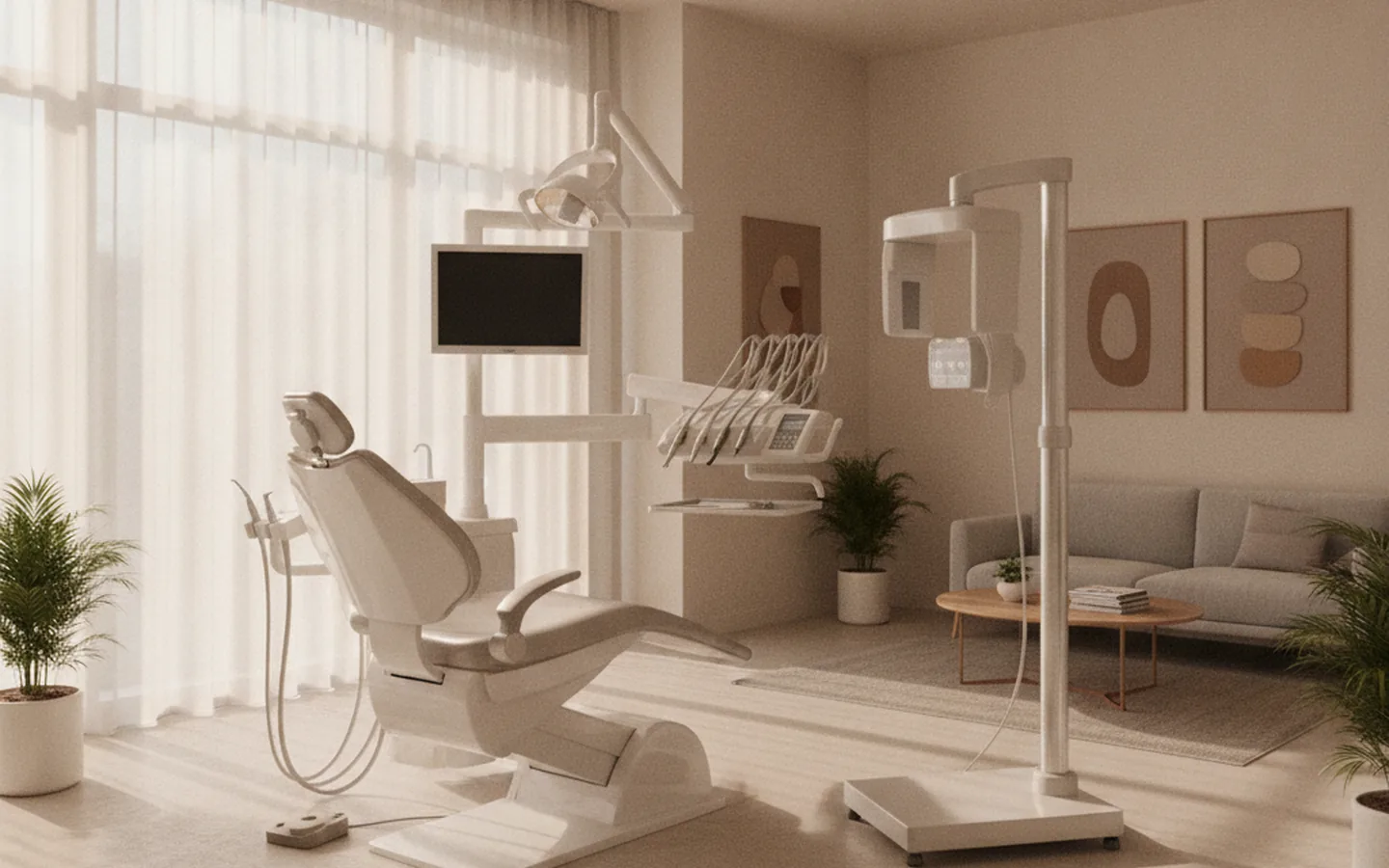
The chairside procedure takes one to two hours. The dentist isolates the gums with a protective barrier, applies a high-concentration gel, and activates it with light or a laser if needed. Teeth lighten by several shades in a single visit.
In-office whitening with a lamp
The most common option. Approximate cost: 15,000 to 35,000 ₽ for both jaws. The price depends on the system the clinic uses and whether cleaning and post-whitening strengthening treatments are included.
Laser whitening
A laser activates the gel with precision, so the procedure is faster and tissues heat up less. This costs more: roughly 25,000 to 50,000 ₽. The difference in final shade compared to a lamp is usually not as big as the difference in price, so the choice is more often driven by the dentist's recommendation and tooth sensitivity.
Internal (walking bleach) whitening
Suited to a single darkened tooth after root canal treatment. The gel is placed inside the tooth for several days under a temporary filling. Roughly 3,000 to 8,000 ₽ per visit; sometimes two or three visits are needed.
Let's put all the options into one table. The figures are approximate, as of 2026: use them as a starting point for a conversation with a clinic, not as a price list.
| Method | Price (approximate, 2026) | Effect | How long it lasts |
|---|---|---|---|
| Whitening toothpaste | 250 to 1,200 ₽ | within the tooth's natural color | as long as you keep using it |
| Strips | 1,500 to 5,000 ₽ per course | one to two shades | a few months |
| Professional cleaning | 3,500 to 8,000 ₽ | restores the natural color | about six months |
| At-home trays from a dentist | 12,000 to 25,000 ₽ | several shades per course | a year or more with maintenance |
| In-office with a lamp | 15,000 to 35,000 ₽ | noticeable in a single visit | one to three years |
| Laser | 25,000 to 50,000 ₽ | comparable to the lamp method | one to three years |
Hidden costs and how not to overpay
The listed price rarely matches the final bill. Whitening usually comes with extra add-ons, such as:
- a consultation and exam, if the clinic doesn't offer them for free;
- treating cavities and replacing old fillings before the procedure;
- professional cleaning;
- strengthening gels or applications against sensitivity;
- maintenance courses once a year or so.
To compare clinics fairly, ask them to break down what's included in the price. One clinic may quote 18,000 ₽ “all-inclusive,” while another quotes 12,000 ₽ but without cleaning or enamel strengthening, and ends up costing more overall. It's also worth asking which system the clinic uses and whether it provides written aftercare instructions for the first few days.
Who whitening isn't right for
There are situations where the procedure is postponed or replaced with a different solution. The most common ones are pregnancy and breastfeeding, age under 18, untreated cavities, gum inflammation, marked sensitivity, cracks and thinning enamel, and allergy to the gel's ingredients. If the darkening is intrinsic and severe, the dentist may suggest veneers or crowns, but that's a different budget and a different level of intervention.
The practical takeaway is simple. Want to freshen up your smile a bit: start with professional cleaning — it delivers results for a moderate price. Need a noticeable effect: choose between a dentist-prescribed at-home system and a chairside procedure based on your budget and patience. And the decision about which method is safe for your specific teeth belongs to a dentist after an exam.
FAQ
Can you whiten teeth with baking soda or activated charcoal?
Abrasive home remedies scratch the enamel and don't change its underlying color. The surface may look lighter for a short while, but it then stains faster afterward. It's safer to discuss options with a dentist.
Is in-office teeth whitening painful?
The procedure itself is usually painless, but some people develop sensitivity to cold and hot in the first few days. The dentist can run a strengthening treatment beforehand and advise on reducing discomfort.
How do you make the results last longer?
Professional cleaning twice a year, fewer staining drinks, rinsing with water after coffee and tea, and quitting smoking. With an at-home system, the dentist may prescribe short maintenance courses using the same trays.
This article is for informational purposes only and does not replace professional advice. Prices are approximate and current as of the review date. Found an error? Let the editors know via the contact page.