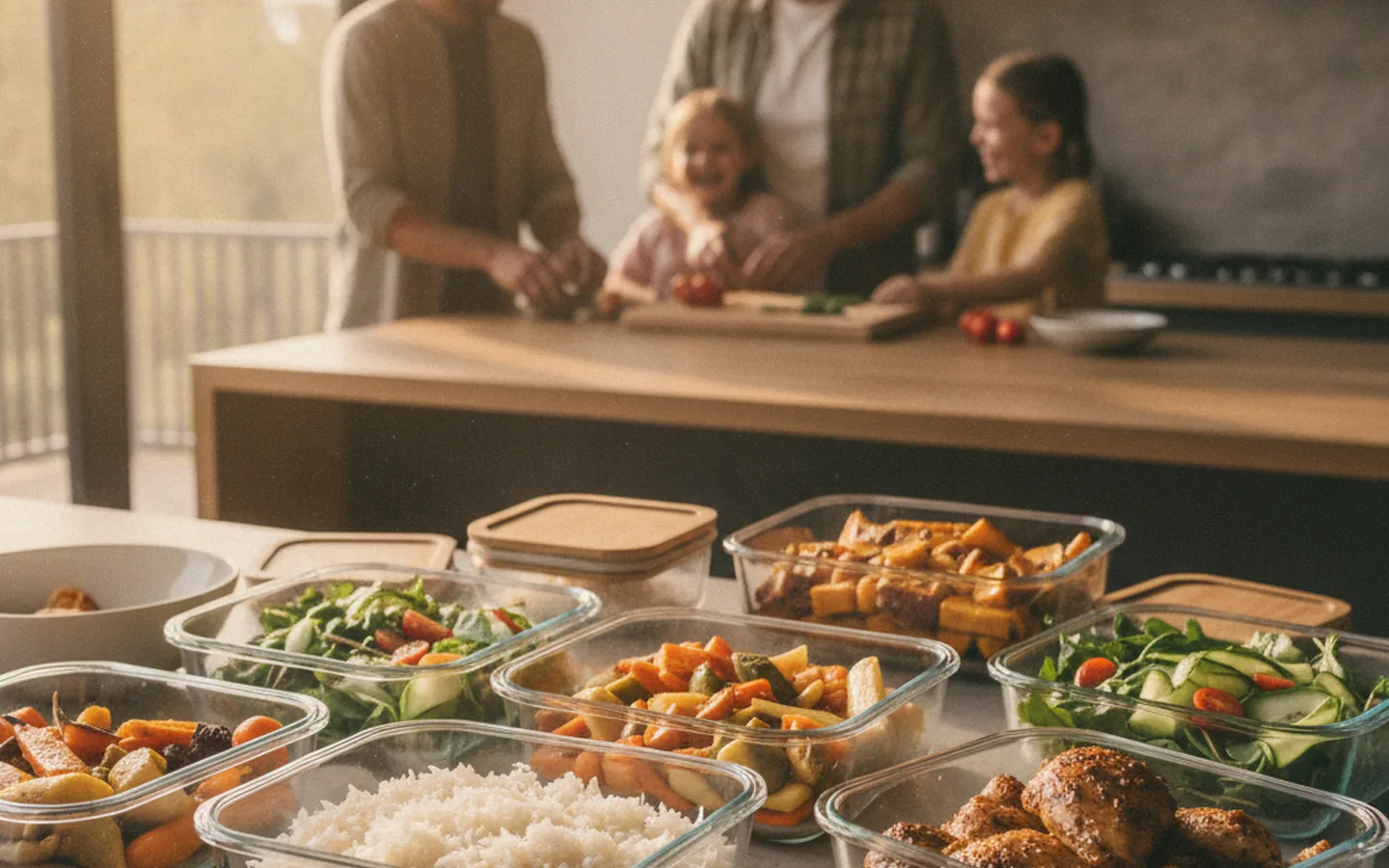
A weeknight in a family with kids often looks the same: everyone's hungry, the fridge is full of groceries, but there's nothing ready to cook, so you end up ordering delivery or boiling dumplings. Weekly meal prep solves this not through heroics, but through planning. A few hours on the weekend save time on weekdays, cut spending on takeout, and help you eat a more varied diet.
The prices and timeframes in the article are approximate, as of 2026, for a family of two adults and two school-age kids. If anyone in the family has special dietary needs for health reasons, check the menu with a doctor.
The principle: prep building blocks, not finished meals
The main beginner mistake is cooking five finished dishes on Sunday and eating them all week. By Wednesday the sameness gets old, and some dishes don't even make it to Thursday. A different approach works better: prep basic building blocks that get quickly assembled into different meals on weeknights.
- Sides: boiled rice, buckwheat, bulgur, baked potatoes, pasta. Cooked in a big batch and kept for 3-4 days.
- Protein: baked chicken, meatballs, boiled beef, ground meat fried with onions, boiled eggs, cooked beans or chickpeas.
- Vegetables: sheet-pan roasted vegetables, chopped fresh vegetables for salads, blanched broccoli and green beans.
- Sauces and dressings: tomato sauce, sour-cream-and-garlic dressing, a simple yogurt sauce. These are what make the same base taste different every time.
- One big dish: a soup or stew for 2-3 days, part of which can be split off and frozen.
For example, from one batch of baked chicken, rice, and vegetables: Tuesday becomes a sauced bowl, Wednesday the chicken goes into a flatbread wrap with vegetables, and the leftover rice turns into fried rice with egg on Thursday.
How to plan a weekly menu
- Look at the whole week. Which days is everyone home for dinner, who eats lunch at school or work, and is there an evening with practice when dinner has to be late and fast.
- Pick 2 proteins, 2 sides, and 1 soup. That's enough for 5 dinners with reasonable variety. Leave the weekend for cooking fresh.
- Write out the combinations by day. Not recipes, just combos: “Monday: meatballs, buckwheat, cucumbers,” “Tuesday: soup,” and so on.
- Account for leftovers. Whatever gets eaten first is best scheduled early in the week, and frozen items toward the end.
- Leave one free evening. In case plans change, or to finish off leftovers.
| Day | Dinner | What's pulled from the prep |
|---|---|---|
| Monday | Meatballs in tomato sauce with buckwheat, fresh vegetables | Meatballs, buckwheat, sauce |
| Tuesday | Bowls: chicken, rice, roasted vegetables, yogurt sauce | Chicken, rice, vegetables |
| Wednesday | Soup and sandwiches | Soup, boiled eggs |
| Thursday | Fried rice with egg and vegetables | Leftover rice and vegetables |
| Friday | Pasta with meatballs or ground meat | Meatballs from the freezer, sauce |
| Saturday and Sunday | Fresh cooking, a new shopping trip | Clear out the fridge |
Weekly meal prep isn't seven identical containers — it's a set of half-finished components that come together into a new dish in fifteen minutes each evening.
Shopping: list and budget
Build the shopping list from the menu and sort it by store section — it's faster and leads to fewer impulse buys. Before you go, check the fridge, freezer, and pantry so you don't buy something you already have.
| Category | Approximate weekly set | Approximate, ₽ |
|---|---|---|
| Meat, poultry, fish | Whole chicken or thighs, 2 kg; ground meat, 1 kg; fish, 0.5-1 kg | 2,500–4,500 |
| Dairy and eggs | Milk, kefir, cottage cheese, cheese, yogurt, 20 eggs | 2,000–3,500 |
| Grains and pasta | Rice, buckwheat, pasta, oats | 500-900 |
| Vegetables and fruit | Potatoes, carrots, onions, cabbage, cucumbers, tomatoes, apples, bananas, herbs | 2,500–4,500 |
| Bread and baked goods | Bread, flatbread | 500-900 |
| Pantry staples and sauces | Tomato paste, oil, spices, canned goods | 500–1,200 |
| Weekly total | Excluding snacks eaten out and sweets | 8,500–15,500 |
The range depends on the region, which store you shop at, and how much meat and fish are in the diet. Bulk packs, seasonal vegetables, and a whole chicken instead of fillets noticeably lower the total.
The cooking sequence on your prep day
Cooking takes 3-4 hours if you run tasks in parallel. The oven, stovetop, and slow cooker should all be running at once while you chop and portion things out.
- Turn on the oven. Lay the chicken and chopped vegetables on sheet pans and put them in to roast.
- Start the rice and buckwheat boiling, and get the soup going in a big pot.
- While everything cooks, shape the meatballs and fry the ground meat with onions. Send part of the raw meatballs straight to the freezer.
- Chop fresh vegetables for salads and pack them into containers with a paper towel so they don't get soggy.
- Make two sauces and boil the eggs.
- Let the dishes cool to room temperature for no more than two hours, then put them in the fridge.
Storage: how long everything keeps
Safety matters more than saving money. Cooked food in the fridge at 2-6°C (36-43°F) usually keeps for 3-4 days; after that it's better to freeze it or not eat it. The guidelines below are general: check the smell and look of food, and don't leave hot food out on the counter for more than a couple of hours.
- Boiled grains and pasta: 3-4 days in the fridge, up to a month in the freezer.
- Roasted chicken and meat: 3-4 days in the fridge, 2-3 months in the freezer.
- Soups and stews: 2-3 days in the fridge, 2-3 months in the freezer. Dairy-based soups don't freeze as well.
- Fresh chopped vegetables: 2-4 days; it's better to cut soft tomatoes and cucumbers the day they're eaten.
- Raw meatballs and patties: straight to the freezer, up to 3 months.
Good containers pay for themselves quickly. Glass ones with tight lids are good for microwave reheating and don't absorb smells, while plastic ones are lighter and more convenient for freezing. For a family of four, 10-15 containers of various sizes are enough.
Breakfasts and packed lunches
Dinners usually show the biggest payoff, but meal prep helps in the morning too. If someone in the family takes lunch to work or a kid needs a school snack, it's convenient to pack those portions right after cooking, while all the components are still out on the counter.
- Cottage cheese pancakes and other pancakes: fried in a big batch and frozen, then reheated in a pan or microwave in a couple of minutes in the morning.
- Overnight oats: oats with milk or yogurt in jars prepped 2-3 days ahead, with fruit added in the morning.
- Lunchbox meals: a side, protein, and vegetables from the shared prep, plus a separate small jar of sauce so nothing gets soggy.
- Snacks: sliced carrots and apples, boiled eggs, portioned cottage cheese. Sprinkle apples with lemon juice so they don't brown.
If two adults pack lunch five days a week, that's ten portions, and you should budget for them in advance: roughly an extra 2,000–3,500 ₽ a week in groceries. Still, that's usually two to three times cheaper than eating lunch at a cafe near work.
How to get the family involved and not quit after a month
Meal prep sticks when it doesn't fall entirely on one person. School-age kids can wash and peel vegetables, shape meatballs, and pack food into containers just fine. Adults split the tasks: one shops, the other cooks. Once a week, ask the family which combinations they liked and which they didn't, and adjust the menu. After a month you'll have a set of 15-20 tried-and-tested combinations, and planning will take ten minutes.
Weekly meal prep doesn't require any special skills: you just need a plan, one free evening or weekend morning, and some fridge space. In return, weekdays leave more time for family and rest, and spending on delivery and impulse purchases drops noticeably.
FAQ
Can you meal-prep food for young kids?
Yes, but for young kids it's better to shorten the storage times and reheat only the portion needed. If a child has dietary needs or allergies, check the menu with a pediatrician.
What if the prepped food isn't eaten by the end of the week?
Cut down the quantity for the next week and freeze part of the food right after cooking. Leftover sides and vegetables work well in omelets, fried rice, and casseroles.
How much fridge space do you need?
For a family of four, two shelves for containers are usually enough. If space is tight, prep a base for 3 days and cover the second half of the week with items from the freezer.
This article is for informational purposes only and does not replace professional advice. Prices are approximate and current as of the review date. Found an error? Let the editors know via the contact page.