In the span of less than a week, four very different organizations went dark. On November 13, the FAA ordered a ground stop after controllers lost connectivity to an outdated telecom system during a routine equipment swap. Three days later, on November 16, customers at Chase, Bank of America, Wells Fargo and Truist couldn't log in or move money, while United Airlines' pilot-facing web apps failed the same day, delaying flights. By November 18, the NSA's own network had gone down too, tied to an urgent patch for a PHP vulnerability.
None of these incidents turned out to be hackers. Homeland Security Secretary Markwayne Mullin told reporters he was about 98% confident the cause was new demand overwhelming outdated systems, not sabotage, Fortune reported on November 17. CBS News separately confirmed the NSA's outage traced to a software vulnerability its teams rushed to patch, not an attack. Two unrelated newsrooms, investigating two unrelated outages, landed on the same root cause: infrastructure never built to carry the load it's now expected to carry.
The specifics differ bank to bank and airline to airline, but the lesson applies to any business running on software nobody has touched in years. A system that quietly worked for a decade can become the single point of failure the moment traffic spikes or a patch can no longer wait. Getting ahead of that risk, rather than discovering it mid-outage, is exactly what dedicated legacy app modernization services are for.
Why "it still works" isn't the same as "it's safe"
Software that has run without incident for years earns a kind of trust it may not deserve. The FAA's ground stop didn't happen during a dramatic cyberattack; it happened during a routine swap of aging telecom equipment, the kind of maintenance work that's supposed to be uneventful. That's the trap with legacy code: it works right up until a maintenance window or a traffic spike finally exposes a part of the system nobody has stress-tested in years. "Still works" and "safe to keep running" are different claims, and legacy infrastructure tends to get judged on the first far more often than the second.
The pattern behind Chase, United and the NSA outages
A software bug, not a cyberattack
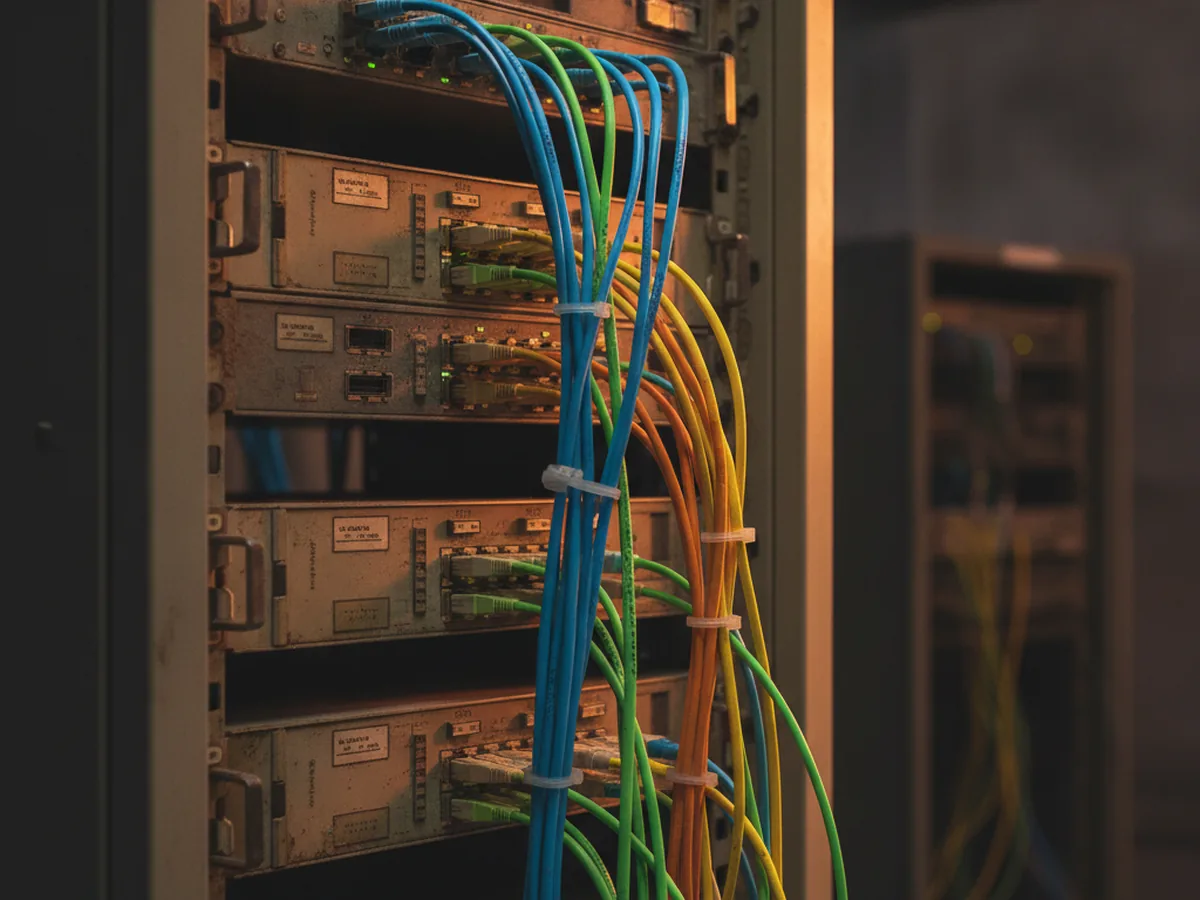
Both Tier-1 investigations point the same direction. Fortune's reporting captured Mullin's near-certainty that surging demand, not an adversary, overwhelmed outdated banking and airline systems. CBS News' reporting on the NSA outage was just as specific: the disruption was linked to a software vulnerability under urgent patching, not malicious activity. Neither outlet found evidence of a breach. The common thread across four outages at four very different kinds of organizations was infrastructure age, not intent.
Legacy systems meet new scale
The working theory described in Fortune's coverage is that newer technology and usage patterns are straining systems built for an earlier era of demand. That's a scaling problem as much as an age problem. Code that comfortably handled last year's transaction volume doesn't automatically handle this year's, and the gap tends to surface under live load rather than in a test environment, which is exactly why it reads as a surprise when it finally breaks.
What this means for your own business software
None of this requires a Fortune 500 budget to take seriously. A few practical habits close most of the gap between "it still works" and "it's safe":
- Inventory what nobody has touched in years. Most teams can name the parts of their product everyone's afraid to open; write that list down and treat it as a risk register.
- Patch dependencies on a schedule, not after an incident. The NSA's outage traces to an urgent, reactive patch. Routine, scheduled patching catches the same class of vulnerability before it forces a fire drill.
- Load-test before your own peak season, not after it breaks. The FAA and the banks found their limits live, in production. A deliberate load test finds those same limits on your schedule, not a customer's.
- Know when "patch it" turns into "rebuild it." Some fixes are a weekend's work; others signal the underlying layer needs an honest rewrite, not another patch.
FAQ
Was this a cyberattack?
No. Homeland Security Secretary Markwayne Mullin said he was about 98% confident the outages came from new demand overwhelming outdated systems, not sabotage, and CBS News separately reported the NSA's outage traced to a software vulnerability under urgent patching. Neither investigation found evidence of malicious activity.
Does this only affect huge companies like banks and airlines?
No. Any application with a legacy layer nobody has touched in years carries the same risk. Banks and airlines just have the scale to make the failure national news; a smaller business running the same kind of untouched, untested code faces the same scaling and patching risks, just with less attention when it breaks.
Is "legacy" just old code, or something more specific?
It's more specific than age alone. Legacy, here, means code or infrastructure a team can no longer change safely: nobody fully understands it, it lacks tests, or it's too fragile to touch without risking an outage. A five-year-old system that's well documented and actively maintained isn't legacy in this sense; a two-year-old system nobody dares modify can be.
Sources: Fortune, CBS News. For informational purposes only. Found an error? Let the editors know via the contact page.