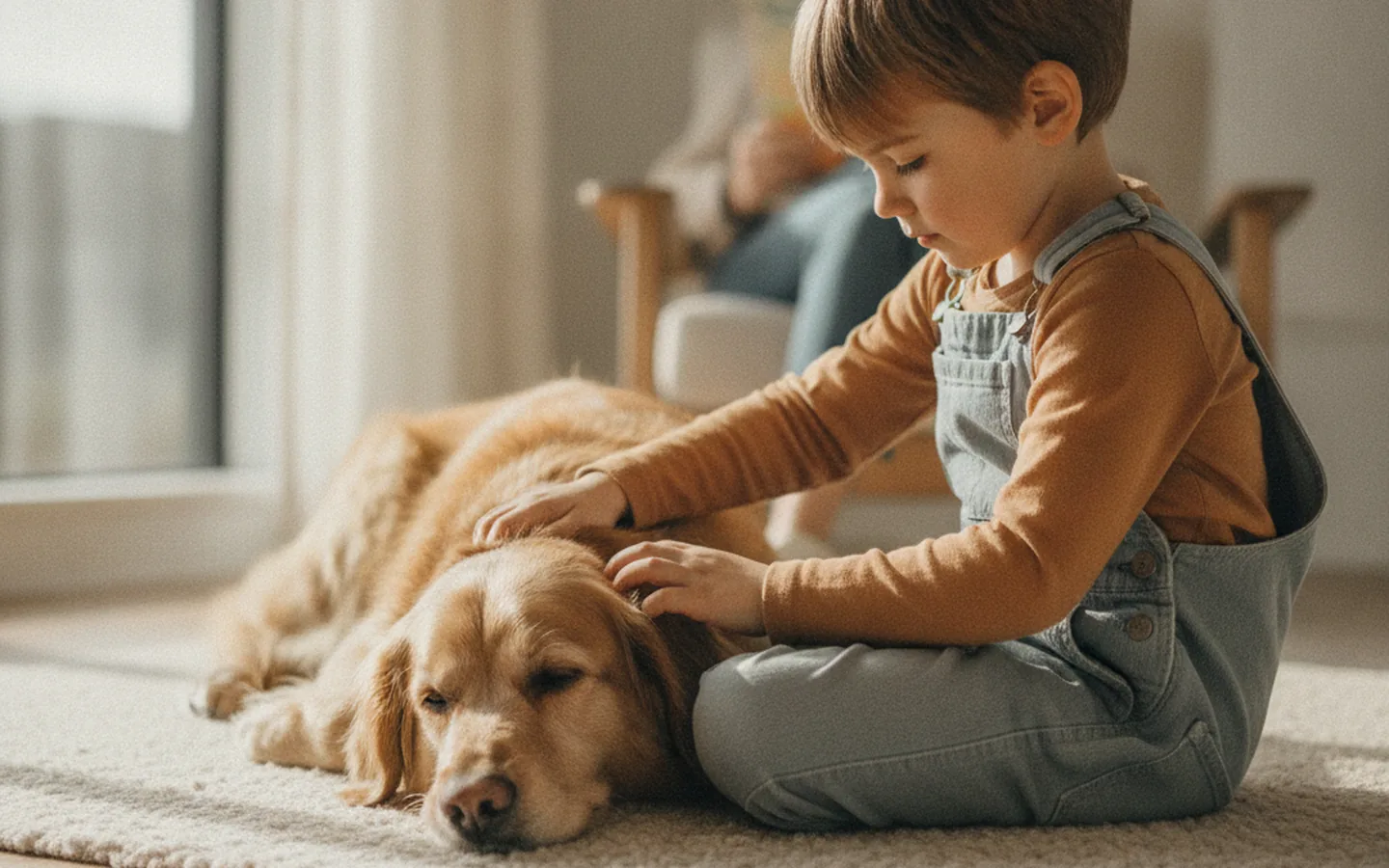
The request “let's get a dog” comes up in almost every family with kids. The decision feels emotional, but in practice it's a long-term project: a dog lives 10-15 years and needs daily walks, training, vet care, and money. A poor choice turns into stress for everyone, including the pet itself. Below we break down how to approach the choice soberly — factoring in the kids' ages, apartment size, family routine, and budget.
First, answer the key questions honestly
Before choosing a breed, it's worth discussing a few practical questions with the family. The answers determine whether a dog is right for you at all, and which kind.
- Who will walk the dog? At least twice a day, in any weather, for 30-60 minutes — longer for active breeds. A child under 12-14 shouldn't walk a large dog alone.
- How much time will the dog spend alone? If everyone is away for 9-10 hours, you need a calm adult dog or a dog walker's help.
- Does anyone in the family have allergies? “Hypoallergenic” breeds don't really exist in a strict sense. Before deciding, spend time with a dog of the chosen breed, and consult an allergist if in doubt.
- How do you spend weekends and vacations? Who will watch the dog when you're away, and are you willing to travel with it.
- What budget is realistic? Not just the purchase, but also monthly costs for food, the vet, and care.
Breed and temperament
Breed doesn't guarantee character, but it sets important boundaries: energy level, size, guarding instinct, exercise needs. For a family with kids, the key traits are a stable temperament, tolerance of noise and touch, willingness to work with people, and moderate energy.
| Dog type | Example breeds | Pros for the family | What to keep in mind |
|---|---|---|---|
| Large companions | Labrador retriever, golden retriever | Friendly, trainable, patient with kids | Need a lot of exercise, shed a lot, very active as puppies |
| Medium companions | Beagle, Cavalier King Charles spaniel, medium-sized poodle | Convenient size for an apartment, affectionate | Beagles are stubborn and vocal; spaniels can have hereditary heart problems |
| Small toy breeds | Maltese, Shih Tzu, Bichon Frise | Easy to keep in an apartment, take up little space | Fragile: a small child could accidentally injure the dog |
| Herding and working breeds | Border collie, Australian shepherd | Smart, active, train very well | Become unmanageable without daily mental and physical stimulation |
| Mixed breeds from a shelter | Mixed breeds of various sizes | You can choose an adult dog with a known temperament | You'll need to learn more about the dog's history from volunteers |
It's worth mentioning breeds with pronounced guarding or fighting instincts separately. They can be wonderful family dogs with experienced owners, but they require serious training with a dog trainer and a confident hand. For a first dog in a family with young kids, this is a risky choice.
A dog is adopted for the family, not for the child. Walking, treating, and training it will fall on the adults regardless, even if the child swears to do everything alone.
Puppy or adult dog
Most families want a puppy: it's cute, and it seems like you can raise it exactly how you want. In reality, a puppy demands a huge amount of time. In the first months it chews everything, learns to go potty, cries at night, and needs several feedings and walks a day.
| Criterion | Puppy, 2-4 months old | Adult dog, 2-5 years old |
|---|---|---|
| Time needed for training | A great deal in the first six months | Moderate; basic skills are usually already there |
| Predictability of temperament | Low; a lot depends on you | High; the temperament is already clear |
| Risk for young kids | Nips, jumps, scratches | Lower, if the dog has been tested around kids |
| Impact on the apartment | Chewed furniture, puddles | Minimal with the right choice |
| Suits families | Where someone is home a lot | With working parents and young kids |
If the kids are under 5-6, a calm adult dog often turns out to be a better fit than a puppy. At good shelters and with foster coordinators you can ask for a dog that has been tested around kids, and volunteers will honestly tell you about its habits.
Where to get a dog
Before making a final decision, it's useful to spend at least a few hours with a dog of the chosen breed — visit a show, friends who own one, or a breeder. That way the kids can see how the dog actually behaves, how much hair ends up on clothes, and how loud it is. Sometimes after such a visit the family changes their choice, and that's far cheaper than returning the dog six months later.
It's smarter to buy a purebred dog from a breeder who belongs to a kennel club and shows the puppy's parents, documents, and results of tests for hereditary diseases common to the breed. A good breeder asks a lot of questions about your family themselves and may refuse if they think the dog isn't a good match for you. That's a good sign.
- Be wary if the seller is willing to hand over a puppy younger than 2-2.5 months.
- Don't buy a puppy “off the street” without being able to see the mother and the living conditions.
- A suspiciously low price for a purebred puppy almost always means no documents and no health checks.
- When adopting from a shelter, ask for time to get acquainted: a walk, a visit with the kids, sometimes a trial period.
How to prepare your home and kids for a dog
Start preparing a couple of weeks before the dog moves in. Clear the floor of cords, shoes, small toys, and anything a puppy could swallow. Move household chemicals and medications higher up or into cabinets that close. Pick a spot for the bed: a quiet corner without a draft, not in a walkway and not next to a radiator.
It helps to agree on the rules with the kids ahead of time and even write them on a note to put on the fridge: who feeds the dog, who refills the water, who helps on walks, what not to do with the dog. In the first days after moving in, the dog may be disoriented, eat poorly, and sleep a lot. Explain to the kids that it needs to be left alone to settle in, rather than being carried around or shown off to guests “to see the puppy.”
Find a vet clinic near your home and book a first checkup within a week of the dog's arrival. While you're at it, check whether there's a training ground or puppy group classes nearby — it's good for the whole family to attend so that commands sound the same from everyone.
First-year costs
The first year is always more expensive than the following ones: the purchase, vaccinations, gear, training. Below are approximate figures for a medium-sized dog, as of 2026. For large breeds, food and vet costs are higher.
| Article | Approximate, ₽ |
|---|---|
| Purchase from a breeder | 40,000–150,000 (free or for a donation from a shelter) |
| Vaccinations, microchipping, parasite treatment | 8,000–15,000 |
| Spaying or neutering (decided with the vet) | 10,000–30,000 |
| Food for the year | 30,000–70,000 |
| Gear: bed, bowls, leash, harness, carrier | 8,000–20,000 |
| Training course with a dog trainer | 15,000–40,000 |
| Grooming, toys, treats, supplies | 10,000–25,000 |
| Total excluding the purchase | 81,000–200,000 |
Set aside a separate reserve for unexpected vet visits: poisoning, injuries on walks, stomach issues in puppies. In some cities you can get pet insurance, but read the coverage terms carefully before buying.
Safety rules for kids and dogs
Even the kindest dog is still an animal, and young kids can't read its signals. Most bites within a family don't come from a “mean” dog, but from situations where the dog was cornered, woken up, or had its food taken away.
- Don't leave kids under 6-7 alone with the dog without adult supervision.
- Teach the child not to touch the dog while it eats or sleeps, not to hug it around the neck, and not to pull its ears or tail.
- Set up a spot for the dog that the kids don't go into — a bed or a pen where it can rest.
- Explain to the child the signs of anxiety in a dog: a tucked tail, looking away, lip licking, growling.
- Divide responsibilities by age: even a preschooler can feed the dog and refill its water, while a teenager can walk a small dog.
A dog in a family with kids gives a great deal: responsibility, activity, attachment, the ability to care for another being. But this experience is only good when the dog is chosen honestly, to fit the family's real life. It's better to spend a month on choosing and preparing than years fixing a mistake.
FAQ
At what age can a child have a dog?
There is no strict threshold, but with kids under 5-6 years old, a dog needs constant adult supervision. Many families wait until the child is 7-8: by then they understand the rules of interacting with an animal and can handle simple responsibilities.
Which breed should you choose for an apartment and young kids?
Calm, medium-sized dogs with a friendly temperament usually work well. Small toy breeds are fragile, while large active breeds need a lot of exercise. It's best to make the final decision after meeting the specific dog and talking with a breeder or dog trainer.
How much does it cost to keep a dog per year after the first year?
Roughly, as of 2026, for a medium-sized dog it's 50,000–100,000 ₽: food, preventive care, routine vet visits, grooming, and supplies. For large breeds and chronic health issues, the amount is higher.
This article is for informational purposes only and does not replace professional advice. Prices are approximate and current as of the review date. Found an error? Let the editors know via the contact page.