
That's a demand story we already covered when Duo preorders sold out in minutes — this is an engineering one. Apple confirmed this week that developers have already optimized more than 100,000 apps for the iPhone Duo's dual-screen layout, with "thousands more being added every day," according to Apple Newsroom. The device launched in late October 2026, which means that volume of adapted apps landed in under three weeks.
TechCrunch reported the same figure the same week, framing it as Apple leaning hard on its developer relations machine rather than waiting for the ecosystem to catch up on its own. The company ran 50-plus in-person workshops across 19 cities, and more than 2,000 developers walked through the new iOS 27.1 SDK APIs and the Device Hub simulator in Xcode 27.1.
That speed is the real story here, and it's not unique to Apple or to this one device. Every time a new screen shape ships, someone has to rebuild the layout logic behind it fast — which is exactly the kind of cross-platform rebuild work YuSMP Group's Flutter development team handles for clients adapting one app to multiple device shapes.
What Actually Happened
Apple's dual-screen iPhone Duo launched in late October 2026. By November 6, Apple was telling developers and reporters alike that more than 100,000 apps on the App Store had already been optimized for its folding display, with new submissions arriving daily. AppleInsider and MacRumors both corroborated the same number independently, and 9to5Mac ran it again in a later roundup.
Apple didn't just wait for that adoption to happen. It ran more than 50 in-person workshops in 19 cities, walking over 2,000 developers through the new APIs in the iOS 27.1 SDK and a new Device Hub tool in Xcode 27.1 that lets a developer simulate a Duo in every fold pose — open, closed, rotated — without owning the hardware. Named apps already optimized include Microsoft's Office suite, Zoom, Etsy, Goodnotes, and the NBA and NHL apps.
Why This Isn't Just Apple's Problem
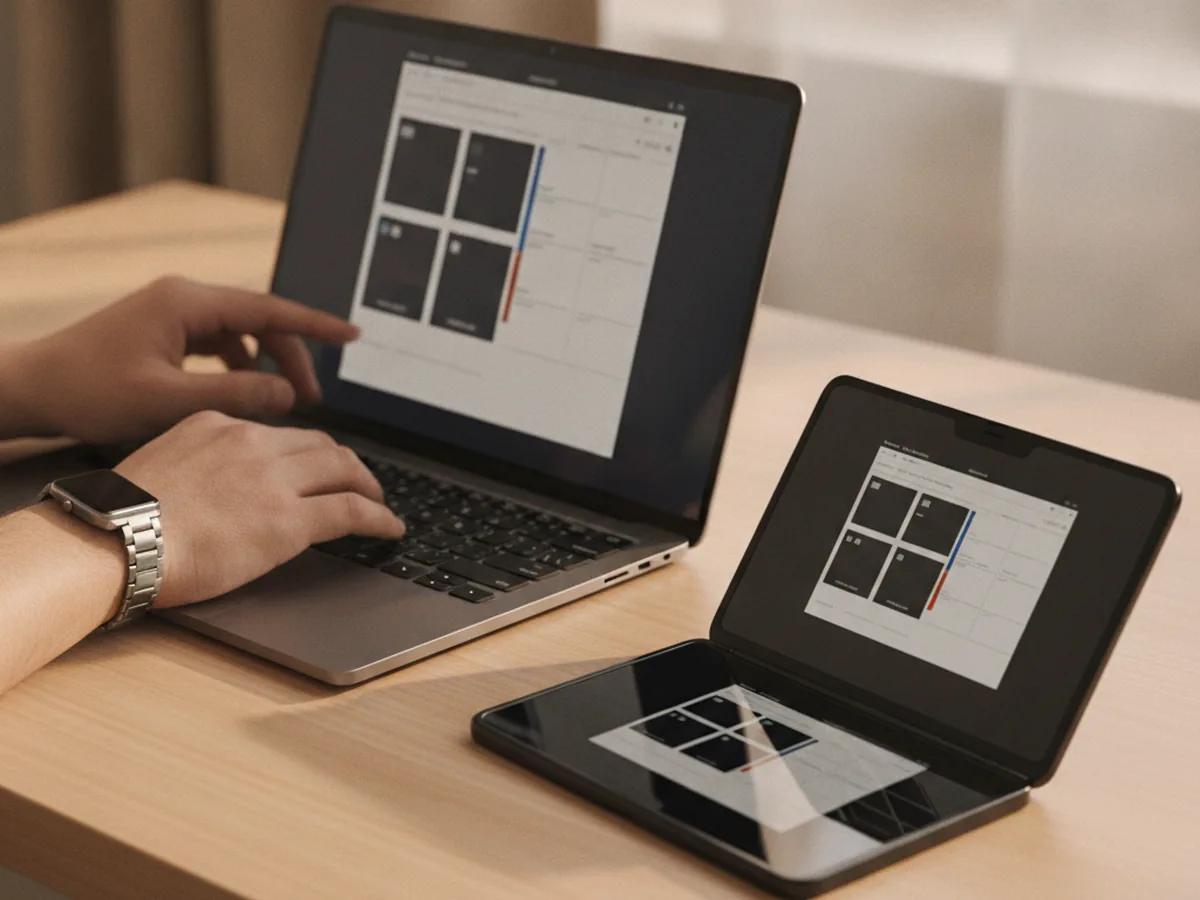
A folding phone isn't a one-off curiosity anymore, and it isn't the last new shape coming either. Watches, tablets, in-car displays, and now a book-style foldable all ask the same question of any app: does the layout still make sense when the aspect ratio changes underneath it? Apple shipping a new form factor every year or two means that question doesn't get asked once — it gets asked again with every new category of device.
For a small business running its own app, that's not an abstract trend. It's a recurring line item: every time a meaningfully different screen shape reaches real adoption, someone has to go back into the UI and make sure buttons aren't cut off, lists don't collapse into a single unreadable column, and forms still fit without scrolling sideways.
The Real Cost of "Optimized for Duo"
Here's what "100,000 apps optimized" glosses over: for most of those developers, "optimizing for Duo" meant touching the iOS codebase only. If the same business also has an Android app, that's a second, entirely separate native codebase, built with different layout tools, that still doesn't know anything about foldable screens — Android's own foldables included.
That's the actual expense behind a dual-screen launch. It's not one redesign, it's two, built in two different languages, maintained by two different sets of engineers, each needing its own pass whenever a new form factor shows up. A business with native iOS and native Android apps pays for that layout work twice, every single time.
A cross-platform framework changes that math because the layout logic — the part that actually has to reflow for a new aspect ratio — is written once and shared across both platforms, instead of duplicated. The next hardware shift, whatever device category it turns out to be, gets cheaper to absorb because there's only one codebase's worth of layout work to redo, not two.
What Small Businesses Should Actually Do Before the Next Hardware Shift
None of this means rushing a full redesign because one new phone exists. A more useful starting point:
- Audit which screens actually break on unusual aspect ratios. Check forms, multi-column lists, and anything with fixed-width layout on a tablet or an unusually wide simulator window before assuming it's fine.
- Don't chase one device. Rebuilding a screen specifically for the iPhone Duo's exact fold is a narrower bet than fixing the layout logic that breaks on any unusual aspect ratio, Duo included.
- Prioritize responsive layout work over device-specific hacks. A flexible grid and adaptive components pay off on every future screen shape; a one-off fix tuned to this year's device doesn't survive the next one.
Bottom Line
100,000 apps adapting to a new screen shape in under three weeks shows how fast this cycle has gotten — not how settled it is. Another new form factor will show up before this one finishes rolling out fully, and the businesses least disrupted by it will be the ones that treated "responsive layout" as ongoing infrastructure rather than a one-time project.
FAQ
Do I need to redesign my app for iPhone Duo right now?
No, not urgently unless Duo users are already a meaningful share of your traffic. But responsive layout work pays off for every future device, not just this one.
Does this affect Android apps too?
iPhone Duo itself is Apple-only, but foldable Android phones already exist and more are coming, so the same reflow problem applies on both platforms.
What's the fastest way to make an app work across multiple screen shapes?
A single cross-platform codebase with responsive layout widgets handles new aspect ratios in one place instead of maintaining two separate native codebases.
This article is for informational purposes only and does not replace professional advice. Found an error? Let the editors know via the contact page.