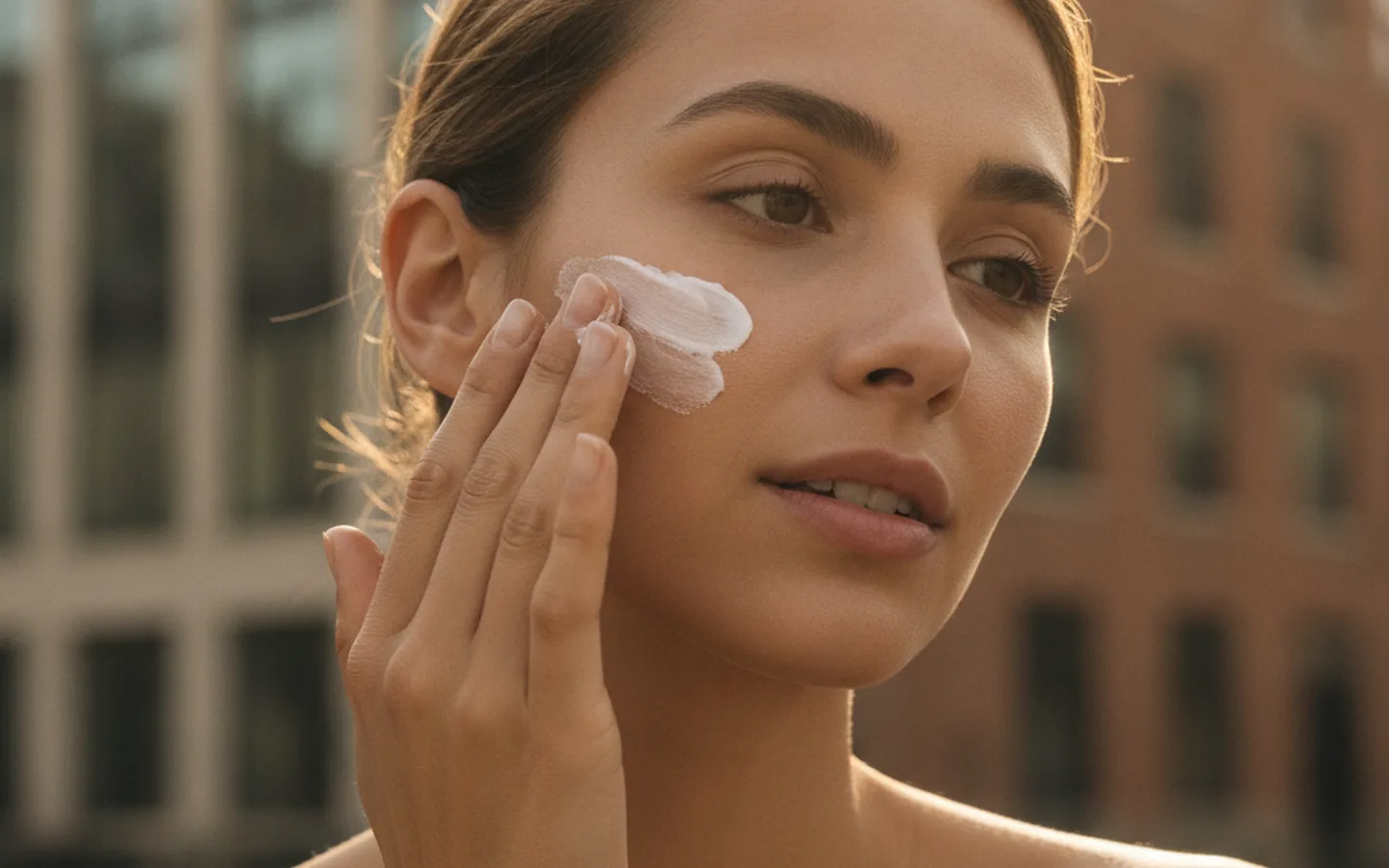
Sunscreen was long considered a beach product you pull out for a summer vacation. Meanwhile, ultraviolet light reaches your skin on a cloudy day, through a car window, and on the walk from the subway to the office. It’s responsible for most visible photoaging: pigment spots, dryness, fine lines, uneven tone. Below we break down how to choose a cream for everyday city life and use it so it actually works.
This article is for informational purposes only. If you have a skin condition, are prone to allergies, take medication that increases sun sensitivity, or notice new moles or spots, see a dermatologist.
What the numbers and plus signs on the package mean
The solar ultraviolet that reaches the ground is split into two types. UVB rays cause redness and sunburn. UVA rays penetrate deeper, are barely felt, pass through glass and clouds, and are responsible for pigmentation and skin aging. A good cream should cover both ranges.
- SPF shows protection against UVB. SPF 15 blocks about 93% of these rays, SPF 30 about 97%, SPF 50 about 98%. The difference between 30 and 50 looks small, but in terms of the percentage of radiation let through, it’s noticeable.
- PA with plus signs (from PA+ to PA++++) indicates UVA protection under the Asian rating system. For the city, it makes sense to choose at least PA+++.
- Broad spectrum, or the UVA-in-a-circle logo on European products, means UVA protection is at least a third of the stated SPF.
- Water resistance is listed separately and means the cream keeps working for a certain time in water. It isn’t essential for a city day.
It’s also important to understand the limits of these numbers. SPF doesn’t mean you can spend 30 or 50 times longer in the sun without consequences: in practice, sunscreen rubs off, washes away with sweat, and spreads unevenly. So the number on the package shows the product’s potential, while the amount and regularity of application determine the real protection.
Chemical and mineral filters
Filters in the formula fall into two groups. Chemical ones, also called organic, absorb ultraviolet light and turn it into heat. Mineral, or physical, filters (zinc oxide and titanium dioxide) mainly reflect and scatter the radiation. Each group has its own advantages.
| Parameter | Chemical filters | Mineral filters |
|---|---|---|
| Texture | Light, transparent, absorb quickly | Thicker, can leave a white cast |
| Under makeup | Usually excellent | Depends on the formula, some are tinted |
| Sensitive skin | Can sometimes cause a stinging feeling around the eyes | Less likely to irritate, suitable for children and after procedures |
| Onset of action | Recommended to apply 15–20 minutes before going out | Work right after application |
| Approximate price in 2026 | 600 to 2,500 ₽ per 50 ml | 900 to 3,500 ₽ per 50 ml |
Many modern creams are hybrids combining both types of filters. This gives high protection along with a pleasant texture. It’s best to choose not by filter type but by how the product behaves on your skin: it shouldn’t ball up, sting or shine.
A cream with SPF 50 applied in a thin layer protects worse than SPF 30 in the right amount. The number on the tube only works at the full dose.
Texture for your skin type
The best sunscreen is the one you’re willing to use every day. If a product feels sticky, shines or stains your collar, sooner or later it will stay on the shelf.
- Oily and combination skin: fluids, gels, essences with a mattifying effect, labeled “non-comedogenic” and “oil-free.”
- Dry skin: creams with moisturizing ingredients (glycerin, hyaluronic acid, ceramides). You can sometimes skip a separate moisturizer under SPF.
- Sensitive skin: mineral or hybrid formulas without fragrance or alcohol, ideally with a short ingredient list.
- Darker skin tones: chemical filters or tinted mineral products to avoid a gray or white cast.
- For men and those who don’t like creams: light fluids and sticks that apply in a few seconds.
How much to apply and how often to reapply
The SPF number is determined in a lab by applying 2 milligrams of product per square centimeter of skin. In practice, people apply two to three times less, and the real protection drops proportionally. To avoid weighing out your cream, use simple reference points.
- The two-finger rule. Squeeze out strips of cream along the length of your index and middle fingers. That’s enough for the face and neck.
- A quarter teaspoon for the face alone, if you find it easier to measure volume.
- Apply in two layers. First apply half, let it absorb for a minute, then apply the second half. This makes it easier to spread the full dose and not miss any areas.
- Don’t forget the areas that get skipped most often: ears, hairline, sides of the neck, upper eyelids, backs of the hands.
- Reapply every two hours in direct sun, after swimming and heavy sweating. If you’re in the office all day and only go out for lunch, it’s enough to apply in the morning and reapply before a long walk.
For reapplying over makeup, sprays, sticks and cushions with SPF are convenient. They don’t give as precise a dose as cream, but they help maintain protection throughout the day.
How to check a cream before buying it
The packaging tells you more about a product than the advertising does. Before buying, it’s worth spending a minute reading the label and, if there’s a tester, trying it right in the store.
- Look for both SPF and a UVA protection mark on the tube: PA plus signs, a UVA-in-a-circle logo, or a broad-spectrum label. If only SPF is listed, protection against aging rays may be weak.
- Check the expiration date and manufacture date. Sunscreen filters lose activity over time, so it’s better not to buy a cream that’s nearly expired, even at a discount.
- Apply a little product to the inside of your wrist or along your jawline. After a few minutes, assess whether there’s a white cast, stickiness, or oily shine.
- If your skin is prone to irritation, test the cream on a small area for a couple of days before using it on your face for the first time.
Think about your body separately too. For hands, neck and the décolleté area, which stay exposed all summer, it’s handy to keep a separate, larger-volume cream or spray. Body products are usually cheaper per milliliter, roughly 500 to 1,500 rubles per 150–200 ml. The backs of the hands age from the sun just as much as the face, but people remember them far less often, especially while driving.
Where you need sunscreen in the city, and where you can relax
| Situation | What to choose |
|---|---|
| Office, commuting, winter and off-season | SPF 30, PA+++, one application in the morning |
| Summer, walks, working by a window | SPF 50, PA++++, reapply during the day |
| Weekends outdoors, country house, cycling | SPF 50, water-resistant, reapply every 2 hours |
| Mountains, water, snow | SPF 50+, high PA, plus sunglasses and a hat |
Even on a cloudy day, a significant amount of ultraviolet light passes through the clouds, and snow and water reflect it and add to the exposure. So the habit of applying cream every morning, like brushing your teeth, works more reliably than trying to judge the weather each time.
Common mistakes
- Using last year’s tube. Once opened, most creams keep for 6–12 months, and heat in a car or at the beach shortens that.
- Skimping on product. A 50 ml bottle, used correctly, runs out in about a month and a half to two months of daily application to the face.
- Mixing SPF with other creams. Mixing dilutes the filters and reduces protection. Apply products one after another.
- Relying on cream alone. A wide-brimmed hat, sunglasses and shade at midday work together with sunscreen, not instead of it.
Putting together city-level protection isn’t hard: a cream with SPF 30–50 and high PA, a texture your skin likes, a full dose using the two-finger rule, and the habit of applying it every morning. Within a few weeks this stops feeling like a separate step and becomes part of your normal routine.
FAQ
Do you need sunscreen in winter?
There is less UV in winter, but UVA stays constant year-round. In the city, during the cloudy season a light SPF 15–30 product is enough, while in the mountains and on snow you need high protection, just like in summer.
Can you apply SPF under makeup?
Yes, that is the standard order: skincare, then sunscreen, then makeup a couple of minutes later. If your foundation balls up, try a fluid or gel with a different base.
Does sunscreen interfere with vitamin D production?
With normal use, no noticeable effect is observed, because sunscreen is rarely applied perfectly over the whole body. If you are concerned about your vitamin D level, discuss testing and whether you need supplements with a doctor.
This article is for informational purposes only and does not replace professional advice. Prices are approximate and current as of the review date. Found an error? Let the editors know via the contact page.