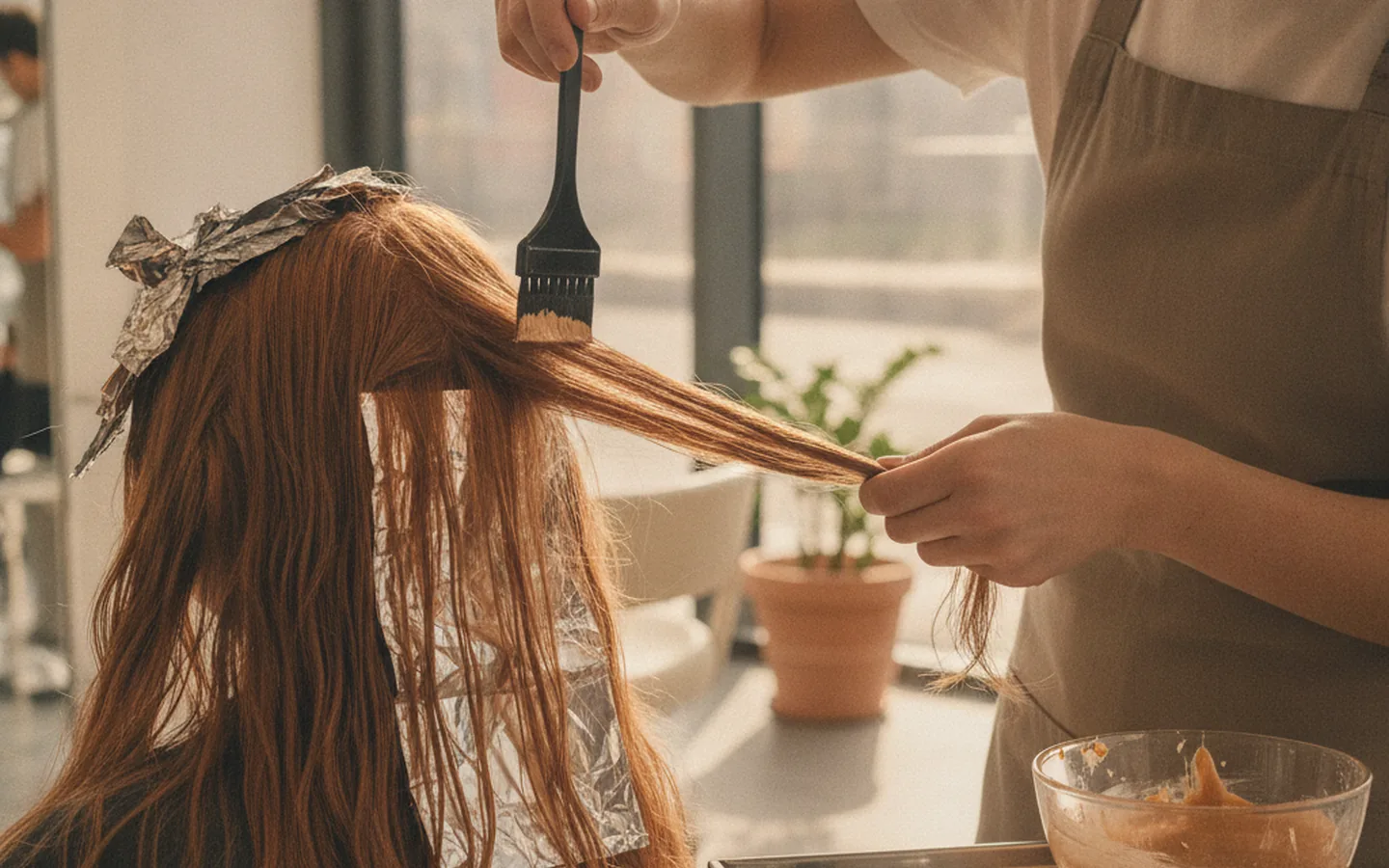
Coloring prices in the same city can differ fivefold, and that's not always overcharging. The single word “coloring” covers very different services: from an hour-long root touch-up to a complex lightening job that takes nearly a whole day. Below we break down what makes up the cost, how much popular techniques typically cost, and how to choose a stylist so the result matches your expectations.
All prices in this article are approximate, for 2026. In Moscow and St. Petersburg they run higher, in regional cities 30-50% lower. An exact total is almost always given only after a consultation, once the stylist sees your hair in person.
What makes up the price
The cost of coloring is made up of several components, and each one can shift the total by thousands of rubles.
- Technique. Single-tone coloring takes less time and skill than color melting, foil work, and multi-step lightening.
- Length and thickness. Most salons split hair into 3-5 length categories. Thick hair below the shoulder blades needs about twice as much dye and time as a bob.
- Starting condition. Natural hair colors predictably, while layers of old dye, especially dark or box dye, require extra steps.
- Materials. Professional dyes, lighteners, and products that protect hair during lightening. Some salons include them in the price, some charge separately by the gram.
- Stylist’s level. A stylist, a top stylist, and an art director at the same salon can charge one and a half to two times more for the exact same technique.
- Related services. Toning, treatments, a haircut, styling. Sometimes they’re included in the price, sometimes they’re added separately.
Types of coloring and approximate prices
The table below shows ranges for medium-length hair (down to the shoulder blades) in major cities. The lower end matches a good budget salon, the upper end applies to experienced colorists and mid-to-high-end salons.
| Technique | What it is | Price, ₽ | Time |
|---|---|---|---|
| Root touch-up | Refreshing the regrowth zone to match the rest of the length | 3,000–6,000 | 1-1.5 hours |
| Single-tone coloring | Even color along the whole length | 4,000–10,000 | 1.5-2.5 hours |
| Toning | Adjusting the shade without significant lightening | 3,000–7,000 | 1-1.5 hours |
| Classic highlights | Lightening individual strands with foil | 6,000–14,000 | 2-3 hours |
| Balayage, shatush | Soft color blending from roots to ends | 9,000–22,000 | 3-5 hours |
| Complex techniques with strand blending | Multi-layer lightening with a smooth transition | 12,000–30,000 | 4-6 hours |
| Growing out dark color | Gradually removing old pigment and lightening | 15,000–40,000 per session | 5-7 hours, often 2-3 visits |
For short hair, prices are usually 20-30% lower than listed; for long, thick hair, 30-60% higher. If the price list shows a price “from,” aim for the middle of the range rather than the lowest figure.
The most expensive coloring is the one you have to redo. Skipping the consultation and a test strand often turns into two visits instead of one.
Which technique to choose
If you want minimal upkeep
Toning and soft color blending from the natural root let you visit the stylist once every 3-4 months. The regrowth zone is barely noticeable, so the annual budget ends up moderate even if the procedure itself is pricey.
If covering gray is a priority
Single-tone coloring, or roots plus toning for the length, both work well here. Gray grows out noticeably, so you'll need visits every 4-6 weeks. A stylist may suggest a technique that masks gray with light strands, which softens the regrowth line.
If you need a radical color change
Going from dark to light is almost never done in one sitting without damaging your hair. A good colorist will propose a plan with several sessions spaced 2-4 weeks apart, with treatments in between. If a stylist promises platinum blonde from black in one visit, that's a reason to be cautious.
How much coloring costs per year
A one-time price says little about actual spending. It's more useful to calculate what the chosen technique costs per year, including upkeep and treatments.
| Option | Visits per year | Approximate cost per year, ₽ |
|---|---|---|
| Root touch-up with gray coverage | 8-10 | 30,000–60,000 |
| Balayage with toning between visits | 3-4 techniques and 2 tonings | 35,000–90,000 |
| Highlights with root touch-ups | 4-5 | 30,000–65,000 |
| At-home care for colored hair | 6,000–15,000 |
It turns out that an expensive, low-maintenance technique with infrequent visits can end up costing no more per year than a cheap coloring that has to be refreshed every month.
At home or at a salon
A box of dye from the store costs roughly 400–1,200 rubles, and the gap with a salon seems huge. For some tasks, doing it at home is genuinely reasonable; for others, it turns into an expensive correction.
- Fine at home: touching up roots in the same shade already on the length, if you’ve done it before and liked the result; refreshing a tone close to your natural color.
- Better at a salon: any lightening by more than two tones, highlights and color blending, going from dark to light, fixing a botched coloring job.
- Salon only: working with severely damaged hair and with hair that’s had a perm or chemical straightening.
Box dye doesn't predict the result well on previously colored hair: the shade on the box is calibrated for a natural base. Pigment builds up layer by layer along the length, and after a year the ends end up noticeably darker than the roots. A colorist then has to remove that buildup, which is the most expensive and time-consuming part of the job. So a sensible approach for many people: have the complex technique done by a professional, and maintain the color between visits with toning shampoos and masks as the stylist recommends.
How to choose a colorist
Hair color is harder to undo than a haircut: a botched shade can take several visits to fix and can damage your hair. So it's worth spending time choosing the right stylist.
- Look at a portfolio with similar hair. If you’re a brunette with thick hair, look for work with that exact starting point, not just perfect blondes on models.
- Pay attention to photos in daylight. Shots under bright salon lighting and with filters hide yellowing and patchiness.
- Book a consultation. Many stylists offer it for free or cheap. A good colorist asks about your coloring history, upkeep, and habits, and tells you honestly what’s achievable.
- Bring examples with you. Two or three photos of what you like, and one of what you definitely don’t. Words like “warm” and “natural” mean different things to different people.
- Ask about a strand test. For a major color change, a stylist may suggest testing the reaction on a single strand first. That’s normal practice, not excessive caution.
- Read reviews with photos taken weeks later. Color right after the salon and a month later can look very different.
After your appointment, ask the stylist to write down which shades and proportions they used, or ask whether the salon keeps this on file for you. If you end up with a different colorist or switch salons next time, that record will save time matching your color and lower the risk of an unexpected shade. It's free, but few people ever ask for it.
How to save without sacrificing quality
- Choose a technique that grows out gracefully: it cuts down the number of visits per year.
- Between complex procedures, get toning instead of a full color: it's cheaper and refreshes the color.
- Use shampoo made for colored hair and heat protection: the color lasts longer.
- Don't try to fix a botched result with box dye. It almost always increases the cost of the correction you'll later need at a salon.
- Ask whether the salon has trainee-level stylists working under a mentor's supervision: for simple services, that's noticeably cheaper.
Coloring remains a service where price is directly tied to time, materials, and experience. Once you understand what makes it up, it's easier to compare offers and choose the technique that fits both your hair and your annual budget.
FAQ
Why did the final price come out higher than the price list?
Usually because of hair length and thickness, extra product used, or additional steps like toning and removing old color. To avoid surprises, ask for the final total at the consultation before work begins.
Can you color your hair during pregnancy?
This is worth discussing with your doctor. Gentle techniques that avoid contact between dye and scalp, plus a well-ventilated room, are often recommended, but the final decision is best made together with a specialist.
How often can you lighten your hair?
It depends on the condition of your hair and the technique, but 6-8 weeks is usually left between major lightening sessions. The colorist will assess how strong your hair is and tell you when it's safe to continue.
This article is for informational purposes only and does not replace professional advice. Prices are approximate and current as of the review date. Found an error? Let the editors know via the contact page.