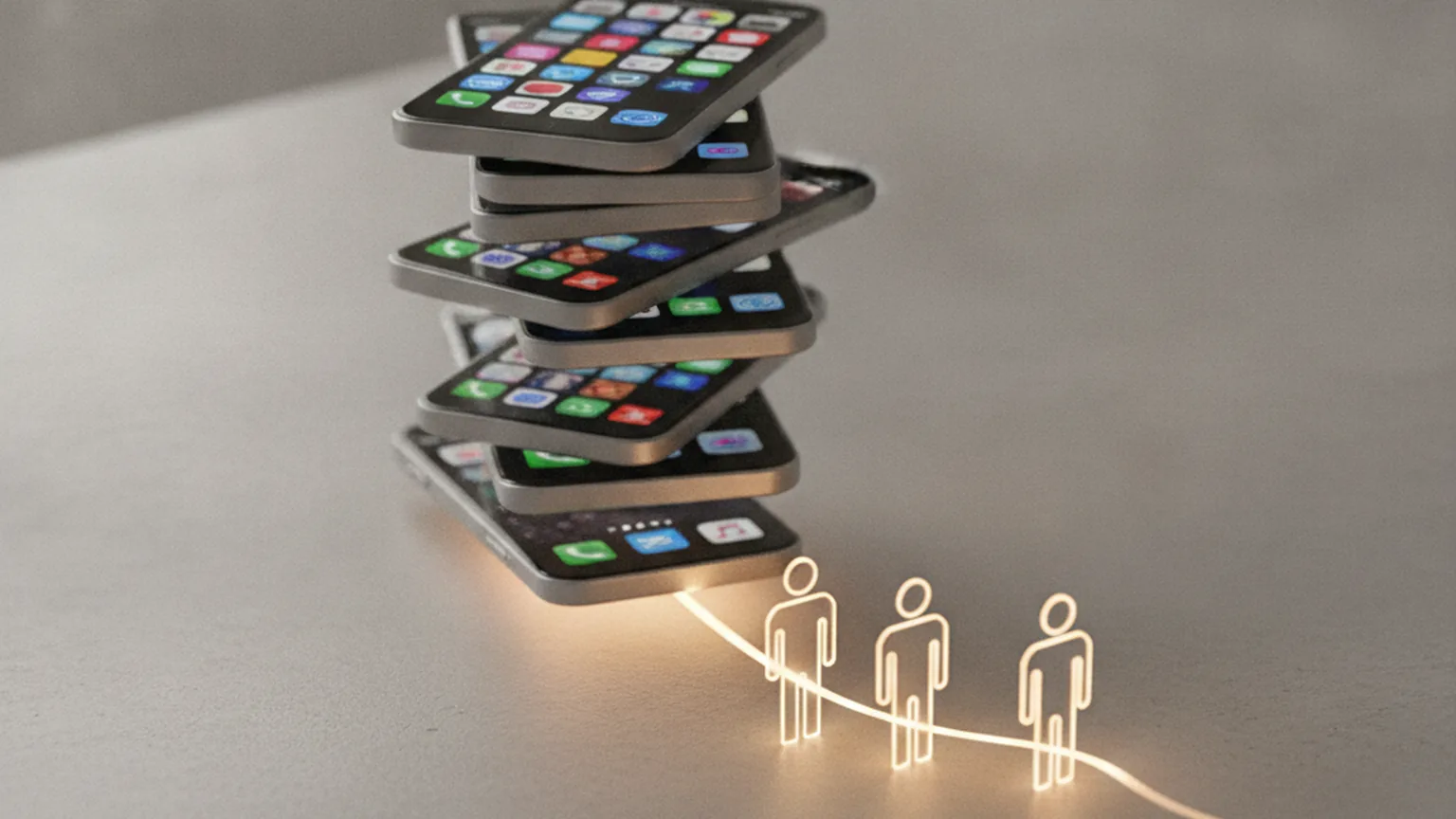
Apple's App Store has told developers for years to expect a review decision within 24 to 48 hours. This October, that promise has quietly stopped holding for a lot of new submissions. Developers are reporting waits stretching to three or four weeks, and the cause isn't a mystery: a wave of AI-generated — commonly called "vibe-coded" — apps is hitting the review queue faster than Apple's reviewers can clear it.
The Register reported that developers are now waiting three to four weeks instead of the usual one to two days, even though Apple maintains that at least 50% of submissions clear review in under 24 hours and 90% clear in under 48. The company pointed to an 84% year-over-year jump in app submissions in April 2026 as the underlying driver, and didn't respond to a request for comment on the current backlog.
MobileGamer.biz put a number on the scale of the queue: Apple is processing roughly 378,000 submissions a week, with an average review time the company puts at about 1.5 days. The reality on the ground looks different — one developer told the outlet: "We have five apps waiting for review for over a week… all were approved on Google Play within 24 hours."
What's Actually Happening
Apple's own stated SLA hasn't changed — the company is still citing 24–48 hours as the norm. What's changed is the volume feeding into that review pipeline. The 84% year-over-year submission surge Apple flagged in April 2026 has been widely tied to a boom in AI-assisted app building: tools that let anyone generate a working app shell in minutes are producing a flood of new-app submissions that still need the same manual human review as everything else. More apps, same review headcount, longer queue — and new-app submissions, which get the closest scrutiny, appear to be absorbing most of the delay.
Google Play Isn't Having the Same Problem
The clearest signal that this is an Apple-specific bottleneck, not an industry-wide slowdown, is that Google Play's review timeline hasn't moved. Developers submitting the same app to both stores are reporting Android approvals landing in about 24 hours — the same five-apps-stuck-on-iOS developer quoted above got every one of them through Google Play within a day.
For anyone planning a launch, that gap is the practical takeaway: an Android build can go out on schedule right now, even while the iOS build for the exact same app sits untouched in Apple's queue.

If You're Launching a Business App, This Is a Timing Problem Now
If a small business is planning its first app launch — say, ahead of the holiday shopping season — Apple's backlog turns what used to be a two-day formality into a real scheduling risk. A launch tied to a promo date, a press embargo, or an investor demo can't just assume the iOS build clears review on the old timeline. Right now, it might sit in the queue for weeks with no guaranteed resolution date.
For a small business trying to hit one launch date on both app stores, Flutter app development is the practical way to ship one codebase to iOS and Android instead of running two separate native review clocks. Building both platforms from a single codebase means a Google Play launch doesn't have to wait on Apple at all — it can go live the moment it's approved, on schedule, while the iOS build clears review on its own timeline. One codebase also means one set of release notes, one QA pass, and one team maintaining the feature set, instead of two native builds drifting out of sync while one of them waits in a queue you don't control.
What to Check Before You Submit
A few adjustments make the current backlog a lot less likely to wreck a launch date:
- Submit the iOS build weeks earlier than you think you need to, not days — the old "a couple of days' buffer" rule of thumb no longer covers the realistic wait.
- Avoid last-minute iOS resubmissions close to a launch date. A rejection now costs more calendar time to recover from than it used to, since the resubmission re-enters the same backed-up queue.
- If the business timeline can't absorb a multi-week iOS wait, plan a Google Play-first soft launch so the product is live somewhere on the committed date.
- Budget a cross-platform build — one codebase, both stores — if hitting a hard launch date on iOS and Android together actually matters to the business.
FAQ
How long does App Store review actually take right now?
Apple says most reviews finish in 1–2 days, but developers are reporting new-app submissions stuck for multiple weeks in October 2026, driven by a surge in AI-made app submissions.
Is Google Play review also slower?
No — developers report Google Play approvals holding steady at around 24 hours even while their iOS submissions for the same app sit in Apple's queue for over a week.
What's the practical fix if I have a fixed launch date?
Submit the iOS build weeks earlier than you think you need, and consider building both platforms from one codebase (cross-platform/Flutter development) so a Google Play launch isn't blocked by Apple's backlog.
This article is for informational purposes only and does not replace professional advice. Found an error? Let the editors know via the contact page.