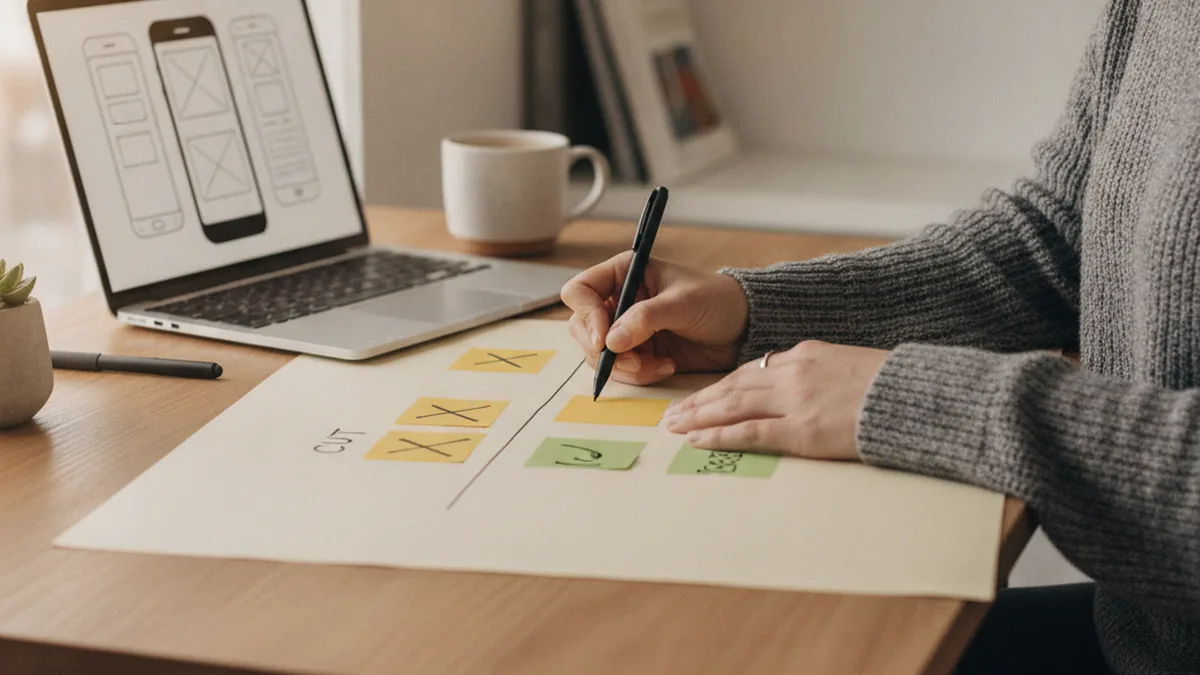
Most apps that fail don't fail because of bad code. They fail because they get built before anyone proves that real people want them enough to use them, or pay for them. By the time a founder finds out the hard way, the budget is gone and so is the runway to try a second idea.
TL;DR: You don't need to write a line of code to test whether people want your app. A fake-door landing page, a concierge version you run by hand, or a dozen honest conversations about what people do today can tell you more than a finished build ever will. Watch what people do, not what they say they'd do, and keep spending near zero until you have a real signal.
The good news is that validating demand doesn't require writing any code, and once you've proven it, the path to actually launch a minimum viable product is a much shorter, cheaper step than most first-time founders expect.
Why "I Think This Will Work" Isn't Validation
Confidence feels like evidence, but the two aren't the same thing. A founder who has spent months thinking about a problem naturally sees the solution clearly, which is exactly why that same founder is the worst judge of whether a stranger will care enough to click a button, let alone pay a monthly fee. Friends, family, and fellow founders at a meetup are the least reliable test group of all: they're primed to be supportive, not honest, and "I'd totally use that!" costs them nothing to say.
Validation means replacing a belief with a measurement. It doesn't need to be expensive or technical, but it does need to put your idea in front of a stranger who has no reason to be polite, and then watch what that stranger actually does next.
Start With the Decision You Actually Need to Make
"Is this a good idea" isn't a testable question, so stop asking it that way. Instead, name the specific decision your test needs to resolve: should the first version focus on scheduling or on messaging? Should the price be $9 a month or $29? Will local shop owners actually switch away from spreadsheets, or just say they're open to it? A validation test with a clear decision attached tells you what to do next; a vague test that was only meant to confirm you're right usually just confirms what you already believed.
Understand What People Do Today Without Your App
Before you sketch a single screen, find out how your future users solve this problem right now, with no app at all. Maybe it's a shared spreadsheet, a string of text messages, a clunky competitor tool nobody likes, or honestly nothing, because the problem isn't painful enough to solve yet. That current workaround is the real competition for your app's attention, not the other startups in your space. If the workaround is tolerable enough that people have made peace with it, your app needs to be meaningfully better, not just different, and that's worth knowing before you spend a dollar building anything.
Match the Experiment to Your Uncertainty
Different doubts call for different tests. Trying to answer every question with one big launch wastes both time and money; a smaller, targeted experiment usually gets you a cleaner answer faster.
Fake-Door or Landing-Page Test
Build a single page describing the app as if it already exists, with a signup or waitlist button where the product would be. Send a small amount of targeted traffic to it and watch the click-through rate. This is the fastest, cheapest way to learn whether your pitch is interesting enough to act on, often within days.
Concierge MVP
Instead of building the software, deliver the outcome by hand: a spreadsheet, a few phone calls, a manually sent report that mimics what the app would eventually automate. It doesn't scale, and it isn't supposed to. A concierge test tells you whether people will actually use and pay for the outcome itself, which is a much stronger signal than clicks on a landing page.
Customer Interviews Done Right
Ask about what people have actually done in the past, not what they imagine they'd do in a hypothetical future. "Tell me about the last time you dealt with this problem" produces far more reliable signal than "would you use an app that does X," because people are generally poor at predicting their own future behavior. The Y Combinator playbook on talking to users is a solid, free reference for running these conversations well.
| Uncertainty type | Cheapest experiment | What a "pass" looks like |
|---|---|---|
| Will anyone even notice this exists? | Fake-door landing page | A click-through or signup rate that beats your traffic's baseline |
| Will people actually use the outcome? | Concierge MVP | Repeat use or a second request without you prompting it |
| Do I understand the problem correctly? | Customer interviews | The same pain point surfaces, unprompted, across most conversations |
| Will people pay for this? | Pre-order or paid waitlist | A real card charge or deposit, not just an email address |
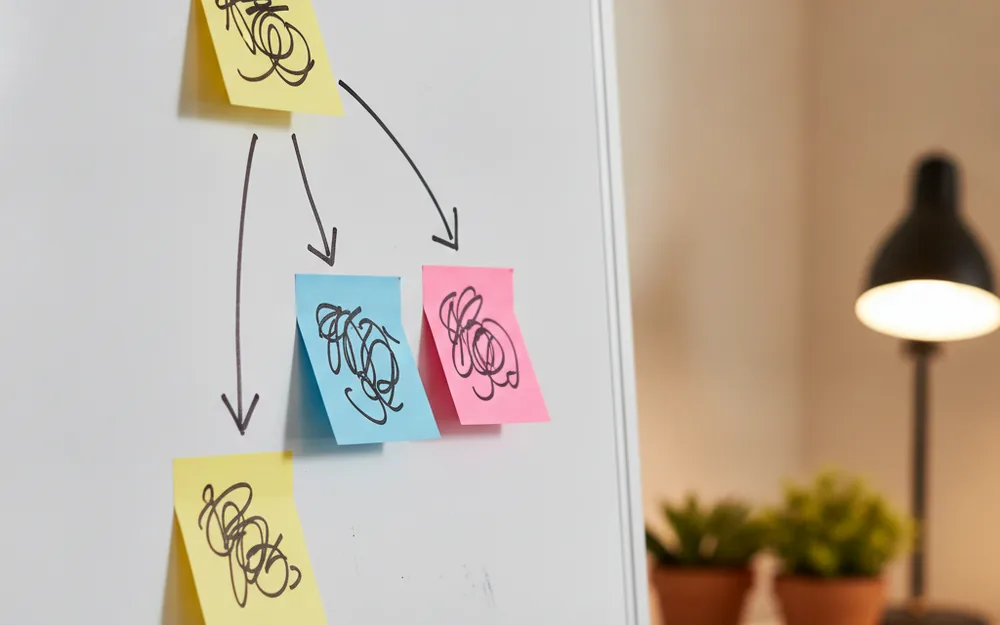
Write a One-Page Validation Brief First
Before you spend anything, write down four things on a single page: the decision this test needs to resolve, which experiment you'll run, the specific threshold that counts as a pass or a fail, and the dollar amount you're willing to spend finding out. Skipping this step is how a $50 landing-page test quietly becomes a $5,000 half-built prototype, because without a written threshold it's easy to keep moving the goalposts until the result matches what you hoped for.
Measure Behavior, Not Opinions
A compliment costs nothing and predicts almost nothing. What predicts real demand is behavior: a click, a signup with a real email, a deposit, a second visit nobody asked for. If your test produced enthusiasm but no action, that's your answer, even if it's not the one you wanted. Founders who skip this distinction tend to walk away from a room full of smiling validators and straight into a development contract, only to discover later that none of those smiles turned into customers.
Define the Smallest Useful Release, Your Real MVP Scope
Once a test has actually passed, the question changes from whether to build to how narrowly to scope the first version. The smallest useful release delivers on the one need your test proved, and nothing else: no admin dashboard, no second platform, no features that were "nice to mention" in an interview but weren't the reason anyone clicked, signed up, or paid. This is exactly the scoping conversation a team that has shipped MVPs before can walk you through quickly, turning your validation evidence into a build plan instead of a wish list.
Common App-Idea Validation Mistakes
- Sunk-cost bias after building too much. Once a prototype exists, it's tempting to treat its existence as proof the idea works. It isn't; the market hasn't weighed in yet, only your effort has.
- Confusing interest with willingness to pay. A hundred waitlist signups can still mean zero paying customers. Test the payment step specifically, not just curiosity.
- Skipping the workaround-research step. Jumping straight to building without understanding the current alternative means competing blind against a habit you never studied.
- Testing with people who aren't the real buyer. Validating a B2B tool with consumer friends, or a local-business app with people outside your target city, produces a signal that won't transfer to actual customers.
FAQ
How much should I spend validating an app idea before building it?
Most honest validation runs cost between $0 and a few hundred dollars: a landing-page builder, a small ad budget to send traffic to a fake-door page, and your own time to run interviews. If you're spending more than a few hundred dollars before you have any signal, you're probably already building rather than testing.
What's the fastest way to test if people want my app?
A fake-door test is usually fastest: a single landing page describing the app with a signup or waitlist button, driven by a small amount of targeted traffic. You'll have a click-through signal within days, often before a developer could finish a single screen.
Is a landing page enough to validate demand?
A landing page tells you whether the pitch is interesting enough to click on, which is a real signal but an early one. Pair it with a concierge test or interviews before committing a full budget, since clicking a button is a much smaller commitment than actually using or paying for the product.
How many people do I need to interview before I trust the signal?
For most early-stage app ideas, 8 to 12 interviews with people who match your real target user are enough to spot a repeating pattern. If the fifth or sixth conversation stops surfacing anything new, you've likely found the pattern; if every conversation contradicts the last one, your audience definition needs work before the idea does.
What if people say they love the idea but won't pay?
Treat that as your real answer, not a disappointing exception. Enthusiasm without a wallet, a signup, or a scheduled next step is one of the clearest validation failures there is, and it's far cheaper to learn before development than after.
Should I build a no-code prototype instead of a fake-door test?
A no-code prototype is a reasonable next step once a fake-door test or interviews have already shown interest, because it lets a small group actually use something close to the real product. Starting there before any cheaper test adds cost and delay without resolving the more basic question of whether anyone wants this at all.
How do I know when I'm ready to move from validation to an actual MVP?
You're ready once you can name the specific decision your test resolved, point to behavior, not opinions, that supports it, and describe the smallest version of the product that delivers on that one proven need. At that point the conversation shifts from whether to build to how narrowly to scope the first version.
This article is for informational purposes only and does not replace professional advice. Found an error? Let the editors know via the contact page.