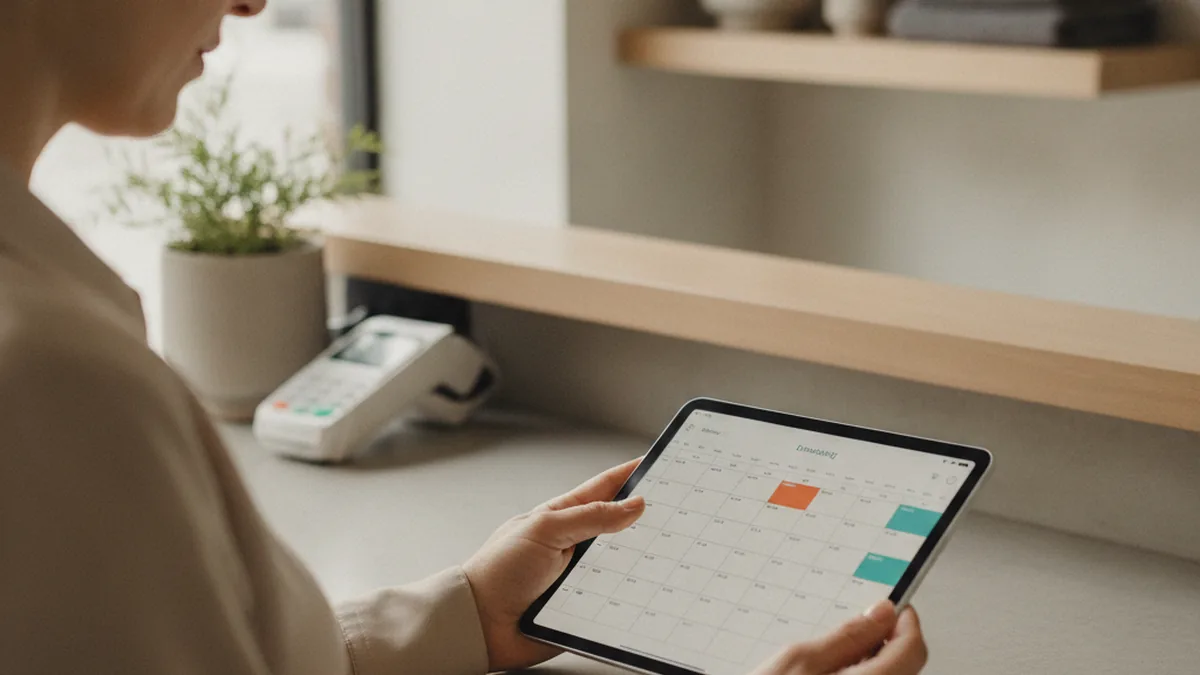
Every salon or studio owner who has outgrown a paper book, a shared spreadsheet, or a free scheduling widget eventually hits the same fork in the road: keep stretching a generic tool, or invest in a booking app built around how the business actually runs. The honest answer to "how much will that cost" is that it depends — but the handful of factors that move the number are consistent across the industry, and once you know them, a realistic budget range stops being a guess.
If the answer turns out to be a custom build rather than a stretched SaaS widget, the next decision is who builds it. Hiring a mobile app development team — YuSMP Group, for example — that has already shipped calendar, payment, and notification logic for service businesses will save most of the costly trial and error a first-time build usually involves.
This guide walks through what drives the price, what a realistic budget looks like at each complexity tier, when a SaaS platform is genuinely the smarter call, and what tends to show up as a surprise cost after launch.
TL;DR:
- A salon or studio booking app typically costs $8,000-$60,000+ to build — the range is driven almost entirely by features and platform choice, not by the idea itself.
- The single biggest price driver is the feature set: payments, staff scheduling, and multi-location support add far more cost than the base calendar does.
- A ready-made SaaS booking widget is cheaper upfront (often $20-$150 a month) but caps how much you can customize the experience and own the client data.
- Budget for costs after launch — hosting, support, and app store fees commonly run 15-25% of the build cost every year.
What Actually Drives the Price of a Booking App?
Four variables account for most of the spread between a $8,000 quote and a $60,000 one, and none of them is the "idea" of a booking app — that part is nearly identical across projects.
Platform Choice — iOS, Android, or Both
Building for one platform first and adding the second later roughly halves the initial spend compared with launching both at once, because design, testing, and app-store submission largely double when you build natively for two ecosystems at the same time. A mobile-friendly booking web page can stand in for the second platform until the budget allows a true native app.
Core Features vs. "Nice to Have" Features
A calendar with open slots and a confirmation email is cheap. Payments, deposits, waitlists, loyalty points, and multi-staff scheduling are not — each one adds its own logic, edge cases, and testing surface. The fastest way to blow a budget is letting "it would be nice if clients could also..." creep into the first release instead of a later update.
Design and Admin Backend Complexity
Clients only see the booking screen, but owners and staff live in the admin dashboard — and a dashboard that handles multiple staff calendars, service menus, and reporting costs more to design and build than the client-facing app itself. Underbudgeting the backend is one of the most common reasons a "simple" app quote turns out to be optimistic.
Integrations (Payments, Calendar Sync, Notifications)
Every third-party connection — a payment processor, Google or Apple calendar sync, SMS or push notifications — adds integration work and an ongoing fee on top of the one-time build cost. Integrations are also where most post-launch bugs originate, since they depend on APIs the salon doesn't control.
How Much Does a Booking App Cost by Complexity Level?
These ranges reflect typical market rates for a small-business booking app in 2026; actual quotes vary by region, team, and exact scope.
| Complexity level | What's included | Typical cost range |
|---|---|---|
| Basic | Single calendar, client self-booking, no payments, basic email confirmations | $8,000-$18,000 |
| Mid-tier | In-app payments and deposits, push notifications, multi-staff scheduling | $18,000-$35,000 |
| Advanced | Multi-location support, loyalty or membership logic, custom admin reporting and analytics | $35,000-$60,000+ |
Should You Build Custom or Use a Ready-Made SaaS Booking Platform?
Neither option is "better" in the abstract — the right call depends on how standard your booking logic actually is.
- A ready-made SaaS widget is usually enough if a single location, a standard calendar, and basic reminders cover how the business operates. It's cheaper, live in days, and someone else handles maintenance and security.
- A custom app starts paying for itself once you have multiple locations, membership or loyalty logic a generic tool can't model, booking rules tied to specific staff or rooms, or a brand experience the business wants to fully own rather than rent from a SaaS vendor.
What's Included in a Realistic Cost Breakdown?
A quote that only lists "booking app" is incomplete — these are the pieces that actually make up the number.
Booking & Calendar Logic
The core engine: available slots, service duration, staff assignment, and conflict prevention. It's the cheapest line item per hour of work but the one every other feature depends on, so mistakes here are the most expensive to fix later.
Payments and Deposits
Processing payment or a deposit at booking time typically adds $3,000-$10,000 to the build, covering payment-processor integration, refund and no-show handling, and the added security review that payment flows require.
Push Notifications and Reminders
Appointment reminders cut no-shows meaningfully, but setting up reliable push and SMS notifications across both platforms is its own small project, usually $1,500-$4,000 depending on how many trigger points (booking, reminder, cancellation, rebooking) are needed.
Admin Dashboard for Staff
The screen staff and owners actually use daily — managing calendars, blocking time off, viewing client history, and running basic reports. For a multi-staff salon, this can be a third or more of the total build cost.
What Costs Show Up After Launch?
The build quote is rarely the last check an owner writes. Hosting and backend infrastructure run a modest monthly fee, a maintenance retainer covers bug fixes and small updates, and both Apple and Google charge developer and commission fees tied to app store distribution and any in-app purchases. Periodic updates to stay compatible with new OS releases are a recurring line item too, not a one-time cost. Together, these typically run 15-25% of the original build cost per year — a number worth budgeting for before launch, not discovering afterward.
How Long Does It Take to Build a Booking App for a Salon?
A basic single-platform app usually takes 6-10 weeks from kickoff to launch. A mid-tier app with payments and staff scheduling runs 10-16 weeks, and an advanced, multi-location build with custom reporting can take 4-6 months. Discovery and design account for more of that timeline than most owners expect — rushing past them is the most common reason a launch date slips.
A Short Checklist Before You Talk to a Developer
Walking into the first call with these answers ready makes quotes far more comparable and cuts weeks off the discovery phase.
- How many locations and staff members need to be supported on day one?
- Does the app need to process payments or deposits, or just confirm bookings?
- Is there existing client and booking data that needs to migrate in?
- One platform first, or both iOS and Android at launch?
- Who owns the client data and can it be exported if you switch providers later?
- What does the support and maintenance arrangement look like after launch, in writing?
FAQ
Can I start with a cheap SaaS widget and upgrade to a custom app later?
Yes, and many salon owners do exactly that — a SaaS widget validates that clients actually want to book online before you commit a larger budget to a custom build. The main thing to watch is data portability: check upfront that you can export your client and booking history, since migrating that history is where upgrades get expensive if the platform locks it in.
Do I need both an iOS and Android app, or can I start with one?
Most salons can start with one platform plus a mobile-friendly booking web page for the other, which keeps the initial build cost roughly half of a dual-platform launch. Check which platform your actual client base uses before choosing — a quick look at your existing contact list or a short client survey usually settles it faster than guessing.
How much do in-app payments add to the cost?
Adding deposits or full in-app payments typically adds $3,000-$10,000 to the build, covering integration with a payment processor, refund and no-show handling, and the extra security review that payment flows require. The ongoing cost is smaller but recurring — usually a 2-3% processing fee per transaction on top of any flat per-transaction charge.
What's the biggest hidden cost owners forget to budget for?
Ongoing support and small feature updates after launch — most owners budget the build cost and stop there, then get surprised a year in by the bill for bug fixes, OS updates, and the staff dashboard tweaks that come up once the team actually starts using the app daily. Budgeting 15-25% of the build cost per year for maintenance avoids that surprise.
Is a web app instead of a native app cheaper?
Generally yes — a responsive booking web app skips the App Store and Play Store review process and the cost of maintaining two separate native codebases, often cutting the initial build cost by 30-40%. The tradeoff is losing native features like push notifications without a workaround and a slightly less polished feel than a true native app.
How do I know if my salon is ready for a custom booking app vs a SaaS tool?
A SaaS tool is usually enough if a single location, a standard calendar, and basic reminders cover how you operate. A custom app starts to pay for itself once you have multiple locations, loyalty or membership logic a generic tool can't model, or booking rules tied to specific staff, rooms, or equipment that off-the-shelf platforms treat as edge cases.
What ongoing costs should I expect in year two?
Expect hosting and backend infrastructure, a maintenance retainer for bug fixes and small updates, App Store and Play Store developer fees, and periodic updates to keep pace with new OS releases. Together these typically run 15-25% of the original build cost annually, more if you're actively adding features rather than just maintaining what shipped.
This article is for informational purposes only and does not replace professional advice. Found an error? Let the editors know via the contact page.